Staining Your Garage Floor for a Professional Look
Is Concrete Stain the Right Choice for Your Garage Floor?
Concrete stain for garage floor surfaces is one of the most popular ways to upgrade a dull, worn slab into something that looks intentional and sharp. But with so many products on the market, it helps to know your options before you commit.
Here are the best concrete stain options for garage floors at a glance:
| Stain Type | Best For | Key Benefit | Key Limitation |
|---|---|---|---|
| Acid-Based Reactive | Older, uncoated slabs | Permanent, mottled natural look | Unpredictable color; needs sealer |
| Water-Based Acrylic (Solid Color) | Most garage floors | Consistent color; low VOC | Film-forming; can peel without prep |
| Water-Based Semi-Transparent | Decorative, newer slabs | Natural stone look; easy cleanup | Shows concrete imperfections |
| Solid Color Concrete Stain | High-traffic garages | UV stable; chemical resistant | Not as decorative as acid stain |
No matter which type you choose, proper surface prep and a quality topcoat are non-negotiable for long-term results.
Your garage floor takes a beating. Oil drips, hot tires, heavy foot traffic, and Georgia’s humidity all work against a bare slab. Concrete stain adds color and character, but it also needs the right system behind it to actually hold up.
One thing most homeowners don’t realize upfront: concrete stain is translucent by nature. It doesn’t hide cracks, stains, or rough patches the way epoxy does. What’s already in the concrete shows through. That can be a feature or a flaw, depending on what you’re starting with.
I’m Scott Shannon, owner of Creative Concrete Coatings and a Marine Corps veteran with decades of hands-on construction and coatings experience. I’ve applied concrete stain for garage floor projects across residential and commercial properties throughout Georgia, and I’ll walk you through exactly what works and what doesn’t.
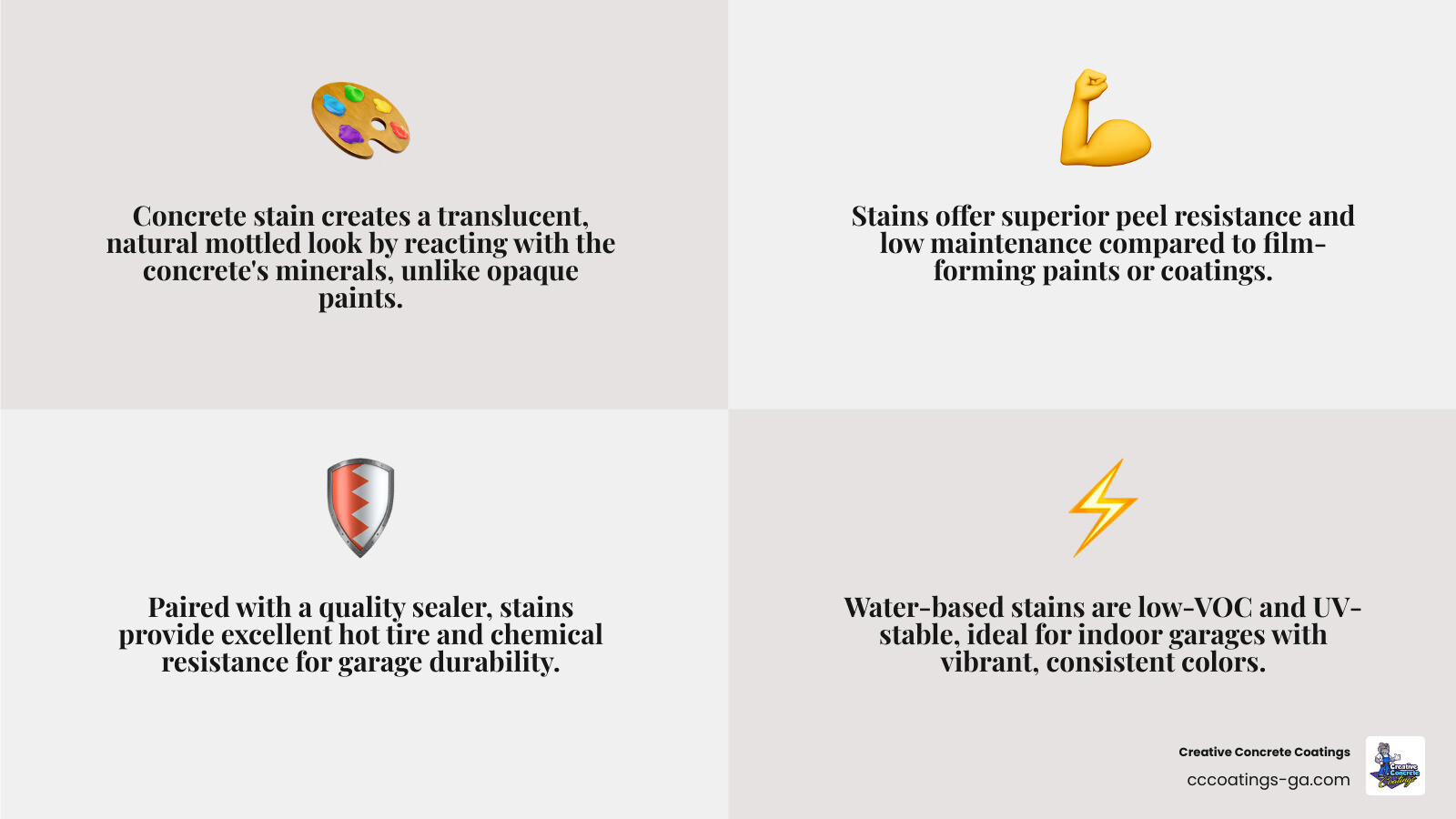
Easy concrete stain for garage floor word list:
Understanding Concrete Stain for Garage Floor Options

When you start looking into a concrete stain for garage floor project in April 2026, you’ll quickly find that “stain” is a broad term. Unlike paint, which sits on top of the surface like a blanket, a true stain is designed to either react with the concrete or soak into its pores. This creates a finish that won’t chip or peel away easily, provided the concrete is “open” and ready to receive it.
The aesthetic goal is often to move away from that industrial gray and toward something with depth. Whether you want a variegated, stone-like appearance or a solid, clean color, what is the best garage floor surface for your home often depends on the condition of your existing slab and how you use your space.
Acid-Based Reactive Stains
Acid stains are the “mad scientists” of the flooring world. These are made of water, hydrochloric acid, and acid-soluble metallic salts. They don’t rely on pigments; instead, they cause a chemical reaction with the calcium hydroxide (lime) in your concrete.
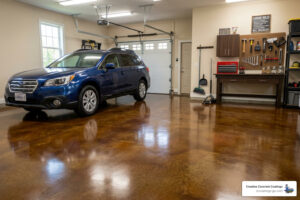
The result is a permanent change in the concrete’s color that mimics natural stone, marble, or even wood. Because every slab has a different mineral makeup, the look is always unique—often featuring a mottled, translucent, and variegated appearance. However, because they rely on a chemical reaction, they are unpredictable. You might expect a light brown and end up with a rustic orange. They also require a “neutralization” step after application to stop the chemical reaction.
Water-Based Non-Reactive Stains
If you prefer a predictable color palette, water-based stains are your best friend. These are essentially extra-fine pigments suspended in a water-based polymer. They don’t react chemically; they simply fill the pores of the concrete.
These stains offer a much wider range of colors, from vibrant blues to deep blacks. They are generally low-VOC, making them safer for indoor use in attached garages in areas like Alpharetta or Johns Creek. They can be applied in semi-transparent layers for a natural look or built up for a more solid appearance. If you are looking for a stain game strong: choosing the right indoor concrete finish, water-based options provide the most control.
Pros and Cons of Choosing a Concrete Stain for Garage Floor
Deciding between a concrete stain for garage floor and a high-performance coating like epoxy requires looking at the trade-offs.
| Feature | Concrete Stain | Epoxy Coating | Garage Floor Paint |
|---|---|---|---|
| Durability | Moderate (depends on sealer) | High | Low |
| Hot Tire Pickup | Resistant (with good sealer) | Highly Resistant | Poor (will peel) |
| Punch-Through Time | Short (minutes/hours) | Long (days) | Minimal |
| Chemical Resistance | Low to Moderate | High | Very Low |
| Visuals | Natural, Translucent | Solid or Flaked | Solid, Flat |
Advantages of Staining
The biggest draw for a concrete stain for garage floor is the aesthetic. It preserves the “soul” of the concrete while adding color. Since the stain penetrates the surface, it is highly resistant to peeling—a common failure point for cheap garage paints.
Staining is also a breathable finish. In many Georgia homes, moisture vapor can travel up through the slab. While thick coatings might bubble or delaminate under hydrostatic pressure, a simple stained and sealed floor often handles moisture migration much better. If you’ve looked into the top rated products for the best epoxy paint for basement floor, you know that moisture management is a top priority for any below-grade or slab-on-grade surface.
Limitations and Considerations
We have to be honest: a stain provides zero “build.” It doesn’t fill in divots, hide hairline cracks, or level out a bumpy floor. In fact, staining often highlights these features. If your garage floor in Lawrenceville has oil deep-set into the pores or significant spalling, a stain might actually make those spots look darker and more prominent.
Furthermore, the protection of a stained floor is only as good as the clear sealer you put on top. Without a high-quality topcoat, things like gasoline or brake fluid can “punch through” the stain and permanently discolor the concrete underneath.
Step-by-Step Preparation and Application
At Creative Concrete Coatings, we always tell our neighbors in Monroe and Suwanee that preparation is 90% of the job. You can buy the most expensive concrete stain for garage floor in the world, but if the surface isn’t prepped, it will fail.
Preparing Your Concrete Stain for Garage Floor Project
The first step is checking for “openness.” If you pour water on your garage floor and it beads up, your concrete is sealed. Stain will not work. To fix this, the concrete must be profiled. While some DIY guides suggest acid etching (using muriatic acid), we prefer mechanical grinding. Grinding opens the pores consistently and removes old contaminants like tire shine or wax.
Essential Prep Checklist:
- Degreasing: Use a high-quality cleaner to lift oil spots.
- Profiling: Aim for a texture similar to 80-grit sandpaper.
- Moisture Testing: Ensure the slab isn’t pushing out too much water, which can cloud the sealer.
- Masking: Protect your baseboards and walls; once stain hits drywall, it’s there forever.
If you aren’t sure if your floor is a candidate for staining, finding the right specialist for your garage floor can save you a massive headache.
Applying the Concrete Stain for Garage Floor
Once the floor is clean and dry, the application begins. For acid stains, we typically use a plastic pump sprayer (no metal parts, as the acid will eat them).
- Circular Motion: Apply the stain in random, overlapping circles to avoid “lap lines.”
- Keep a Wet Edge: Never let a section dry before you blend the next one into it.
- Dwell Time: Let the stain sit for the manufacturer’s recommended time (often 4 to 14 hours).
- Neutralize: For acid stains, you must scrub the floor with a mixture of water and baking soda or ammonia to stop the reaction.
- Rinse and Dry: Rinse until the water runs clear and let it dry for at least 24 hours before sealing.
Maximizing Durability with Sealers and Maintenance
The stain provides the color, but the sealer provides the “armor.” For a garage environment, a simple big-box store acrylic sealer usually won’t cut it. It’s too soft and will succumb to “hot tire pickup”—where hot tires literally grab the sealer and pull it off the floor when you pull out of the garage.
Selecting the Right Topcoat
To truly protect your concrete stain for garage floor, you need a high-build system.
- Polyaspartic Sealers: These are the gold standard. They are incredibly durable, UV stable, and can be driven on in just a few days.
- Solvent-Based Urethanes: Excellent chemical resistance against oil and gasoline.
- Slip Resistance: Stained and sealed floors can be like an ice rink when wet. We always recommend adding a slip-resistant additive (like SharkGrip) into the final coat.
For more on choosing the right protection, check out the ultimate guide to choosing the best basement floor coating, as many of the same durability principles apply to garages.
Long-Term Maintenance Tips
Maintaining a stained floor is relatively easy, but you can’t just ignore it.
- Daily Cleaning: Use a soft-bristle broom or a microfiber dust mop to remove grit that can scratch the sealer.
- Wet Mopping: Use a pH-neutral cleaner. Avoid bleach or harsh citrus cleaners, which can dull the finish over time.
- Fluid Cleanup: Even with a great sealer, you should wipe up oil or chemical spills immediately. The “punch-through” time is much longer with a professional sealer, but it isn’t infinite.
- Resealing: Depending on traffic, you may need to apply a fresh topcoat every 3 to 5 years to keep the floor looking new.
Frequently Asked Questions
Is concrete stain suitable for high-traffic garages with oil leaks?
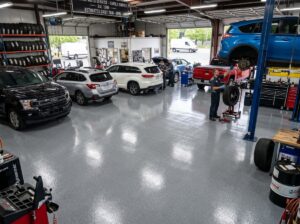
Concrete stain is a great aesthetic choice, but it is not a “fix” for a leaky car. Because stain is translucent, an oil leak can eventually penetrate the sealer and leave a permanent dark spot. If your garage is a working shop with constant fluid spills and heavy equipment, a full epoxy flake system might be a more durable choice than a simple concrete stain for garage floor.
How do you prepare a previously painted floor for staining?
This is a common challenge in older homes in places like Athens or Dacula. You cannot stain over paint. You must completely strip the old paint or use a mechanical grinder to get back to bare, porous concrete. Once the paint is gone, you treat it like a new staining project, ensuring the surface is “open” and ready to absorb the color.
What are the most common mistakes to avoid when staining?
The biggest mistake is rushing the cleaning process. If there is a microscopic layer of dust or sealer left on the floor, the stain will sit on top and eventually wash away. Another common error is walking on the stain while it’s wet—this leaves permanent footprints that you cannot “buff out.” Lastly, skipping the neutralization step with acid stains will lead to the color continuing to darken and the sealer failing to bond.
Conclusion
A concrete stain for garage floor project can completely change the vibe of your home. It turns a utility space into a showroom. However, the difference between a DIY disaster and a professional masterpiece lies in the prep work and the quality of the topcoat.
At Creative Concrete Coatings, we’ve spent over 25 years perfecting the art of concrete transformation. From our home base in Monroe, GA, to projects in Watkinsville and Buford, we pride ourselves on delivering floors that last. With over 455,000 square feet installed and a 100% satisfaction guarantee, we know exactly how to handle Georgia’s unique concrete challenges.
If you’re ready to stop looking at that ugly gray slab and start enjoying a professional, durable finish, we’re here to help. More info about concrete coating services is just a click away. Whether you want the natural look of a stain or the bulletproof durability of a full epoxy system, let’s make your garage the envy of the neighborhood.