Everything You Need to Know About Coatings for Garage Floor Projects
Why the Right Coatings for Garage Floor Projects Make All the Difference
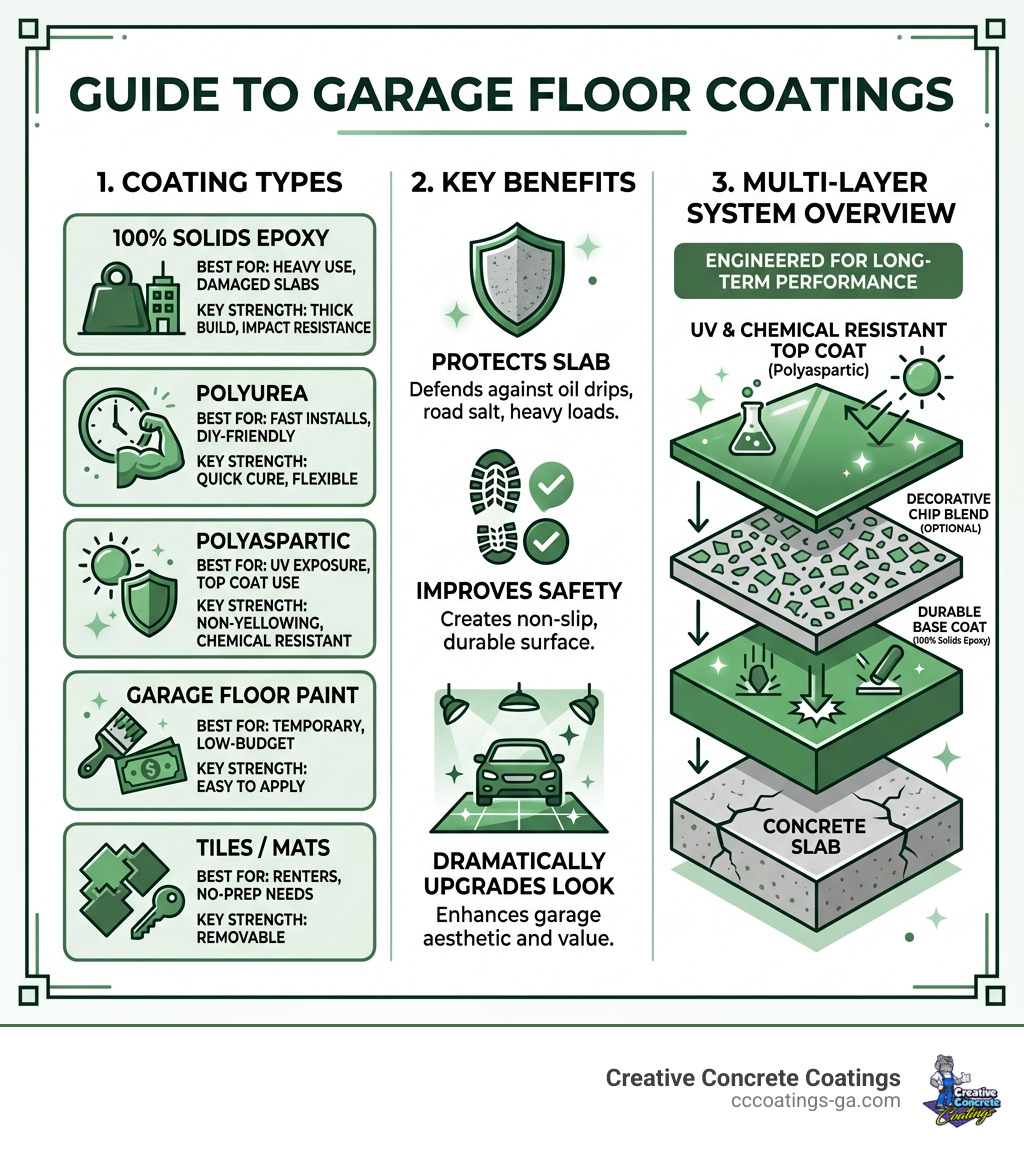
Coatings for garage floor surfaces come in several types, each with different performance levels, cure times, and long-term durability. Here’s a quick overview to help you decide:
| Coating Type | Best For | Key Strength |
|---|---|---|
| 100% Solids Epoxy | Heavy use, damaged slabs | Thick build, impact resistance |
| Polyurea | Fast installs, DIY-friendly | Quick cure, flexible |
| Polyaspartic | UV exposure, top coat use | Non-yellowing, chemical resistant |
| Garage Floor Paint | Temporary, entry-level | Easy to apply |
| Tiles / Mats | Renters, no-prep needs | Removable |
Your garage floor takes a beating. Oil drips, hot tires, road salt, heavy loads — bare concrete was never designed to handle all of that alone. The right coating system protects your slab, improves safety, and dramatically upgrades the look of your space.
But not all coatings are equal. A basic, single-coat product from a hardware store behaves very differently from a professional-grade, multi-layer system engineered for long-term performance. Choosing the wrong one can mean peeling, staining, or a full redo within a year or two.
This guide breaks down everything you need to make a smart, informed decision — from coating types and surface prep to cure times and common mistakes.
I’m Scott Shannon, owner of Creative Concrete Coatings and a United States Marine Corps veteran with decades of hands-on experience in construction and coatings for garage floor and other concrete surfaces across Georgia. Whether you’re upgrading a residential garage or a high-traffic commercial space, the insights in this guide reflect what I’ve learned from real installs on real floors.
Key coatings for garage floor vocabulary:
Popular Types of Coatings for Garage Floor Systems
When we talk about coatings for garage floor projects, we aren’t just talking about a bucket of paint from a big-box store. In fact, professional-grade systems are chemically engineered to bond with the concrete, creating a seamless, non-porous shield.
The heavy hitter in our industry is 100% solids epoxy. Unlike water-based or solvent-based epoxies that shrink as they dry, 100% solids epoxy stays at the same thickness from the moment you roll it on until it cures. This results in an ultra-durable, high-build finish that can withstand dropped tools and heavy vehicle traffic. If you want the best garage floor epoxy to make your neighbors jealous, this is the foundation you need.
Then we have the “new generation” of coatings: Polyurea and Polyaspartic. These are often grouped together, but they offer unique benefits, particularly for those looking for one-day garage coatings in Monroe, GA. Polyurea is incredibly flexible and bonds deeply into the concrete pores, while Polyaspartic is typically used as a high-performance topcoat because it is 100% UV stable.
Choosing the Right Coatings for Garage Floor Durability
The lifespan of your floor is often determined by “mil thickness.” A mil is 1/1000th of an inch. While a standard coat of hardware store paint might be only 1 or 2 mils thick, a professional solid color industrial system can easily reach 20 to 30 mils. This extra “build” provides the impact resistance needed to handle heavy machinery or the occasional dropped 20lb dumbbell without chipping.
High-build systems also excel at hiding minor imperfections in the concrete. When we install a multi-layer system, we are creating a floor that doesn’t just look good on day one but continues to resist chemical spills and abrasion for decades.
The Benefits of Permanent Garage Floor Coatings
It’s tempting to look at temporary solutions like plastic tiles or rubber mats. However, these often become “moisture traps.” Water and road salt can seep through the cracks, sitting against your concrete and causing it to degrade or smell over time.
Why Monroe residents are upgrading their garage floors usually comes down to long-term performance. A permanent coating enhances the home’s appeal and transforms the garage into a clean, livable extension of the home. Unlike tiles that can shift or paint that will eventually peel, a professionally installed coating is a one-and-done solution.
Comparing Performance: Epoxy vs. Polyurea vs. Polyaspartic
Choosing between these three can feel like a chemistry lesson, but here is the breakdown of how these coatings for garage floor applications actually perform in the real world:
| Feature | 100% Solids Epoxy | Polyurea | Polyaspartic |
|---|---|---|---|
| UV Stability | Low (can yellow) | High | Excellent |
| Abrasion Resistance | Very High | High | Exceptional |
| Cure Time | 24-72 hours | 4-8 hours | 2-4 hours |
| Flexibility | Moderate | Very High | High |
| Working Time | 30-45 mins | 10-15 mins | 15-20 mins |
If you are looking for who installs epoxy floors in Monroe, GA that can handle heavy traffic and still look great, you’ll find that we often use a hybrid approach. We might use an epoxy base for its incredible bonding strength and a polyaspartic topcoat for its gloss retention and UV protection.
Hot Tire Pickup and Flexibility in Coatings for Garage Floor Applications
Have you ever seen a garage floor where the coating has peeled away exactly where the car tires sit? That’s “hot tire pickup.” When you drive your car, the tires heat up to roughly 180 degrees. As they cool down in the garage, the rubber shrinks and literally pulls on the floor coating.
Low-quality paints soften under this heat and eventually peel. Professional coatings for garage floor projects use materials with high “elongation” or flexibility. This allows the coating to expand and contract with the concrete during thermal shocks, preventing that frustrating peeling. This is a hallmark of our expert one-day garage coating services in Monroe, GA.
UV Resistance and Yellowing Factors
If your garage gets a lot of natural sunlight, UV resistance is critical. Traditional epoxies are “aromatic,” meaning they will eventually “amber” or turn yellow when exposed to the sun. Polyaspartic coatings are “aliphatic,” which is a fancy way of saying they are 100% UV stable.
When we provide transform your garage: expert one-day garage coatings in Monroe, GA, we prioritize these aliphatic compounds. This ensures that the beautiful gray or tan floor you pick today stays that exact color for the next 20 years, even if you leave the garage door open all afternoon.
The Critical Role of Surface Preparation
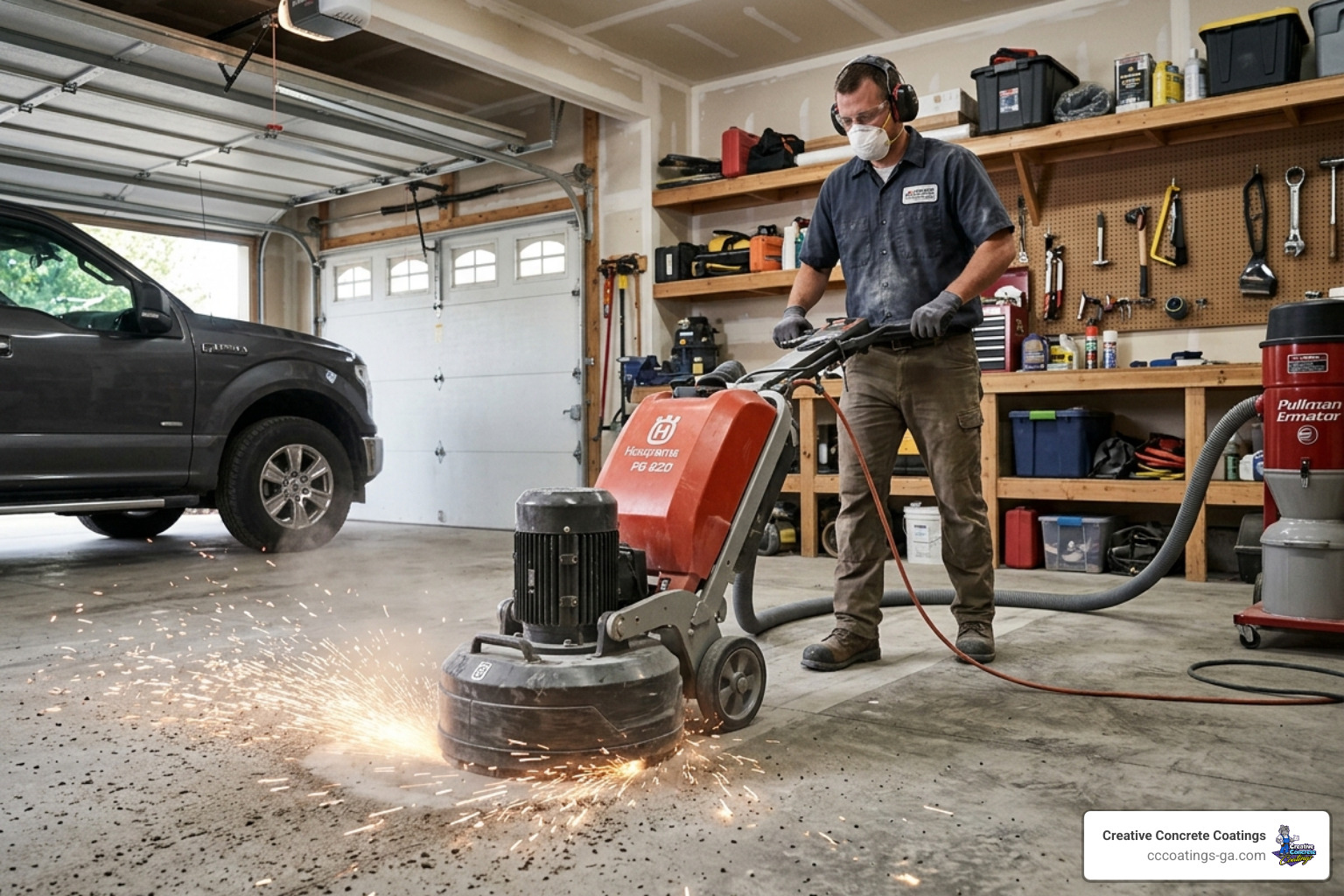
If there is one thing we want you to take away from this guide, it’s this: Preparation is 95% of the job. You could have the highest-quality coating in the world, but if the concrete isn’t prepared correctly, it will fail.
The goal of preparation is to achieve a specific Concrete Surface Profile (CSP). For most garage coatings, we aim for a CSP-2 or CSP-3, which feels roughly like an emery board or medium-grit sandpaper. This profile allows the coating to achieve a “mechanical bond” by diving into the pores of the concrete.
Many DIYers try to use acid etching, but this often fails to remove “laitance” (a weak, dusty layer on top of new concrete) or old sealers. Learning how to epoxy your garage floor like a pro starts with understanding that chemical etching is rarely enough.
The Superiority of Diamond Grinding for Surface Preparation
At Creative Concrete Coatings, we use industrial diamond grinders equipped with HEPA-filtered vacuums for a dustless experience. This mechanical grinding is the gold standard because it ensures the entire floor is porous and ready to bond.
When you search for epoxy floor installers near me: your guide to a flawless finish, always ask about their grinding process. Grinding also eliminates the 24–48 hour drying time required after acid etching, allowing us to get onto the coating phase much faster.
Moisture Testing and Crack Repair
Moisture is the #1 enemy of coatings for garage floor systems. If there is hydrostatic pressure pushing up from under the slab, it can pop the coating right off. We perform moisture tests, such as the calcium chloride test or using a relative humidity probe, to ensure the slab is dry enough for application.
Before the first drop of epoxy hits the floor, we also address cracks and pits. We use specialized epoxy injections and joint fillers to create a smooth, monolithic surface. Following a get your shine on with this epoxy floor painting guide will tell you that skipping crack repair is a recipe for a floor that looks “unfinished” regardless of how much flake you use.
Enhancing Aesthetics with Flakes and Topcoats
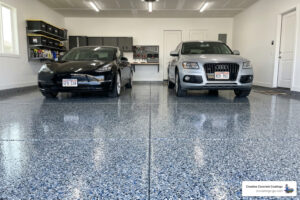
One of the most popular ways to customize your garage is with a decorative flake floor. This isn’t just about looks—it’s about performance. A full broadcast of vinyl chips adds significant thickness and durability to the system.
A flake floor consists of thousands of small vinyl chips “broadcast” into a wet basecoat. This creates a multi-colored, textured finish that is incredibly effective at hiding dirt, salt tracks, and minor floor imperfections.
The Function of Decorative Flakes
While some people prefer a solid color industrial look, flakes offer a massive advantage: traction. A smooth, high-gloss floor can be as slippery as an ice rink when wet. The texture provided by vinyl flakes, combined with a clear topcoat, provides the necessary grip to keep your family safe.
Furthermore, a “full broadcast” system (where flakes are applied until the floor can’t hold any more) creates a layer of armor that is much harder to scratch than a plain coating.
Protective Topcoats and Anti-Skid Additives
The final step in any high-end coatings for garage floor project is the topcoat. We typically use a high-grade polyurethane or polyaspartic. This layer acts like the clear coat on your car, protecting the “color” layers from scratches, chemicals, and UV rays.
If you are finding the right specialist for your garage floor, ensure they include an anti-skid additive like aluminum oxide in the final coat. This invisible grit provides even more slip resistance without dulling the high-gloss shine.
Frequently Asked Questions about Coatings for Garage Floor Projects
How long does it take for a garage floor coating to cure?
This depends entirely on the product. A traditional epoxy might require 24 hours for foot traffic and up to 7 days before you can park a heavy truck on it. However, our polyurea and polyaspartic systems are much faster. You can usually walk on them in 8 hours and return your vehicle to the garage in 24 to 48 hours. Temperature and humidity play a role; high humidity can actually speed up the cure of some polyureas, while cold weather can slow down epoxies.
Can I apply a coating over an old or damaged concrete slab?
Absolutely! In fact, coatings are one of the best ways to “resurface” an old slab. As long as the concrete is structurally sound (not crumbling into dust), we can grind away the damage, fill the cracks, and apply a high-build coating that makes it look brand new. The key is the mechanical bonding achieved during prep. If you follow the steps in how to epoxy your garage floor like a pro, you’ll see that even the ugliest slabs can be transformed.
What are the most common mistakes in DIY garage floor coating?
The biggest mistake is inadequate preparation. Most DIY kits come with a small bag of citric acid for “etching,” which barely scratches the surface. Other common errors include:
- Incorrect Mixing: If you don’t mix the two parts for the full recommended time (usually 3-5 minutes), the floor will have “soft spots” that never dry.
- Ignoring Moisture: Applying over a damp floor leads to immediate peeling.
- Using Improper Tools: Using a standard paint roller instead of a shed-resistant, epoxy-rated cover can leave fuzz all over your new floor. Check out our get your shine on with this epoxy floor painting guide for a list of the right tools.
Conclusion
Upgrading your garage with professional coatings for garage floor protection is one of the most satisfying home improvements you can make. It turns a dusty, dark storage area into a bright, clean, and functional part of your home.
At Creative Concrete Coatings, we bring over 25 years of experience and more than 455,000 square feet of installed excellence to every project. Whether you are in Monroe, Suwanee, Alpharetta, or Athens, we are dedicated to providing a floor that lasts a lifetime.
Ready to stop settling for a stained, cracked floor? Discover why we are the #1 choice for epoxy garage floor coatings in Monroe, GA and let us help you transform your space today.