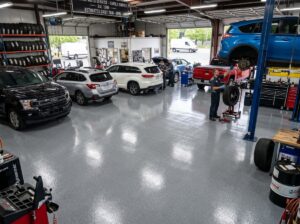
Transform Your Space with Garage Floor Epoxy Flooring
Why Garage Floor Epoxy Flooring Is Worth Your Attention
Garage floor epoxy flooring is a two-part coating system — a resin and a hardener — that bonds chemically to concrete, creating a hard, non-porous surface that resists stains, chemicals, heavy traffic, and daily wear.
Here’s what it delivers at a glance:
- Durability — withstands vehicle traffic, oil spills, and road salt
- Protection — seals concrete against moisture, chemicals, and impacts
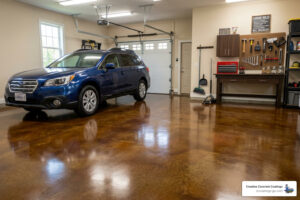
- Aesthetics — transforms a dull slab into a clean, high-gloss finish
- Low maintenance — sealed surface wipes clean easily
- Safety — slip-resistant options available for wet conditions
- Longevity — a properly installed system can last 15-20 years
Unlike regular floor paint, epoxy doesn’t simply dry — it cures through a chemical reaction that locks it permanently to the concrete surface. That’s what separates it from lower-quality alternatives that peel, chip, or fade within a year or two.
Whether your garage floor is showing years of oil stains, road salt damage, or just looks worn out, epoxy flooring is one of the most effective ways to protect and upgrade that space — for both homes and businesses.
I’m Scott Shannon, owner of Creative Concrete Coatings and a United States Marine Corps veteran with decades of hands-on experience delivering professional-grade garage floor epoxy flooring solutions across Georgia. My background in construction and coatings means every project we take on is built to last.
What is Garage Floor Epoxy Flooring?
When we talk about garage floor epoxy flooring, we aren’t talking about a simple bucket of paint you’d find on a standard retail shelf. True epoxy is a thermosetting resin. That means it’s a high-performance material that undergoes a chemical change as it cures. We mix two components—a resin and a hardener—which trigger a reaction that transforms the liquid into a rigid, plastic-like surface.
According to Gorilla Tough, this process creates a surface seal that is incredibly dense. Because it is non-porous, it doesn’t just sit on top of the concrete; it creates a chemical shield. This shield offers immense impact resistance, meaning if you drop a heavy wrench while working on your car in Monroe or Lawrenceville, your floor isn’t going to shatter like a piece of glass.
Core Benefits of Garage Floor Epoxy Flooring
One of the biggest headaches for homeowners in Georgia is the “dusty garage” syndrome. Concrete is naturally porous and constantly sheds fine white dust. By installing a flake floor, we eliminate that dust entirely. The epoxy acts as a moisture barrier, preventing water from seeping up through the slab and keeping your garage dryer and cleaner.
Other benefits we frequently see our clients in Suwanee and Johns Creek rave about include:
- Stain Resistance: Oil, antifreeze, and even harsh chemicals won’t soak in. You can simply wipe them away.
- Light Reflectivity: A high-gloss epoxy floor can increase the brightness of your garage by up to 200%. It’s like adding extra lights without the need for additional lighting fixtures.
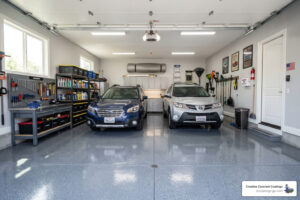
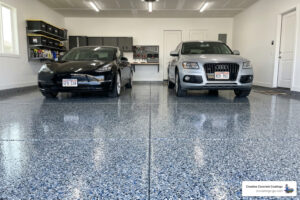
- Aesthetic Versatility: You can customize the look with various flake colors to match your home’s style or even your favorite sports team’s colors.
- Easy Maintenance: A quick sweep and an occasional mop with a pH-neutral cleaner are all it takes to keep it looking brand new.
Types of Epoxy and Coating Systems
Navigating coatings can feel like learning a second language. You’ll hear terms like “100% solids,” “water-based,” and “polyaspartic.” Here is the breakdown of what these actually mean for your floor.
- 100% Solids Epoxy: This is the gold standard. When we apply a 100% solids product, what goes on the floor stays on the floor. There is no water or solvent to evaporate, meaning the thickness you apply is the thickness you get once it’s cured. It is significantly more durable than thinner alternatives.
- Water-Based Epoxy: Often found in ShowRoom Garage Floor Epoxy DIY kits, these are easier to apply but much thinner. Since up to 50% of the product can be water that evaporates, the remaining film is thin and prone to wearing out quickly.
- High-Solids Epoxy: A middle ground that offers good durability and is often used in industrial settings.
- Polyaspartic and Polyurea: These are “hybrid” materials. While epoxy is great for a base, polyaspartic is often used as a topcoat because it is UV stable (won’t yellow in the Georgia sun) and cures much faster.
| Feature | Epoxy (100% Solids) | Polyurea/Polyaspartic | Standard Floor Paint |
|---|---|---|---|
| Durability | Very High | Extremely High | Low |
| Cure Time | 8–24 Hours | 1–4 Hours | 4–6 Hours (Dry) |
| UV Resistance | Low (needs topcoat) | Excellent | Moderate |
| Bond Strength | Excellent | Superior | Weak |
| Hot Tire Pickup | Resistant | Immune | Very Prone |
Choosing the Right Garage Floor Epoxy Flooring Kit
If you are looking for the best garage floor epoxy to make your neighbors jealous, you need to consider more than just the color. You have to look at your traffic volume and what you actually do in your garage.
Are you parking a heavy SUV in Alpharetta? You need a high-build system. Do you use the space as a workshop? You’ll want a military-grade topcoat with high abrasion resistance. For most residential garages, a multi-layer flake system is the best choice because the decorative flakes provide extra thickness and hide minor imperfections in the concrete.
The Crucial Role of Surface Preparation
We have a saying in the industry: “A coating is only as good as the surface it’s bonded to.” If you skip the prep, you are essentially painting over dirt. At Creative Concrete Coatings, we’ve seen many DIY attempts fail because the homeowner didn’t realize that who installs epoxy floors in Monroe GA that can handle heavy traffic and still look great? relies on professional diamond grinding.
Diamond grinding uses heavy machinery to “open up” the pores of the concrete. This creates a concrete surface profile (CSP) that allows the epoxy to sink in and grab hold. Without this, the epoxy just sits on top, leading to the dreaded “hot tire pickup” where the heat from your tires literally pulls the coating off the floor.
Steps for a Successful Installation
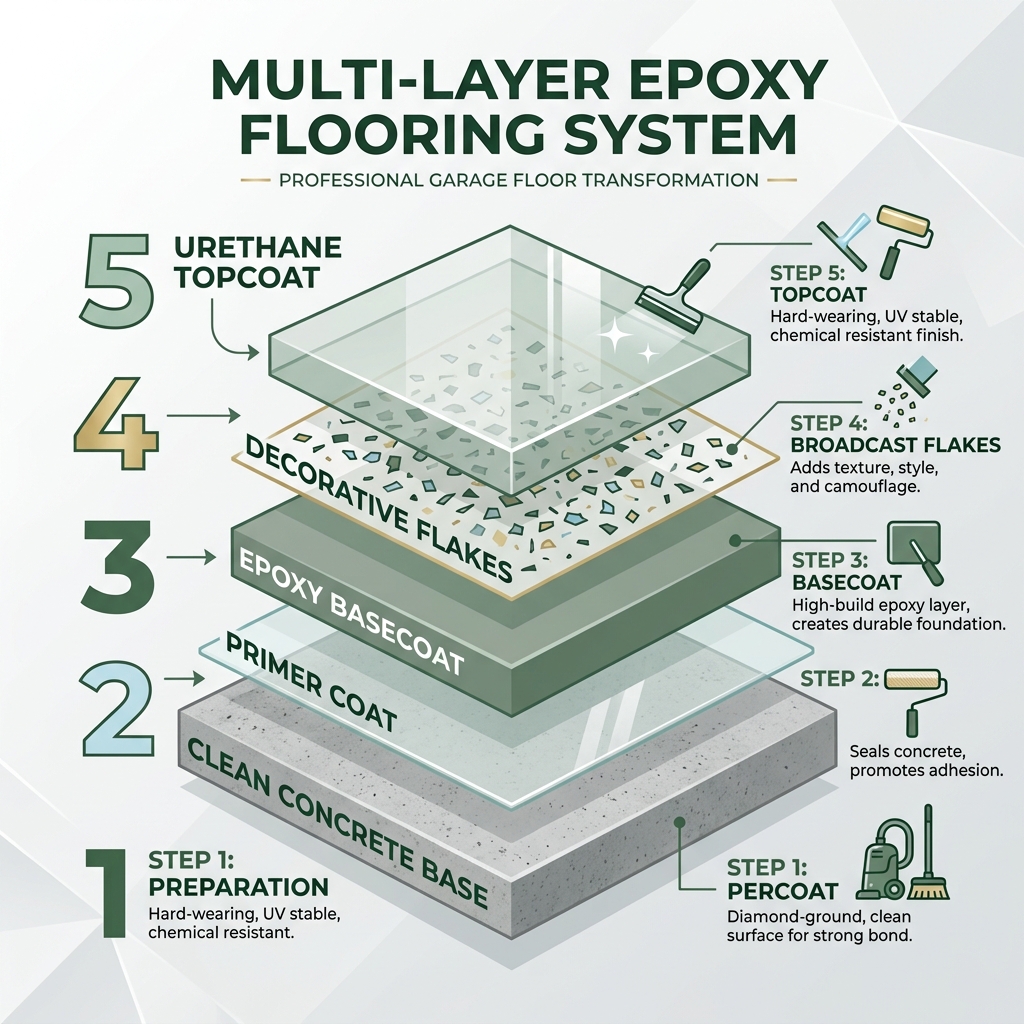
Before we even think about opening a can of resin, we follow a strict protocol:
- Moisture Testing: We check if your slab is “exhaling” too much water vapor, which can cause bubbles.
- Degreasing: We remove every trace of oil and grease.
- Crack Repair: We use specialized densifiers and fillers to patch cracks so they don’t telegraph through the finished floor.
- Vacuuming: We use industrial HEPA vacuums to ensure the floor is surgically clean.
- Primer Application: A dedicated primer ensures maximum adhesion, especially on older slabs in Loganville or Athens.
Our expert one-day garage coating services in Monroe GA utilize these steps to ensure the basecoat bonds permanently.
DIY Installation vs. Professional Results
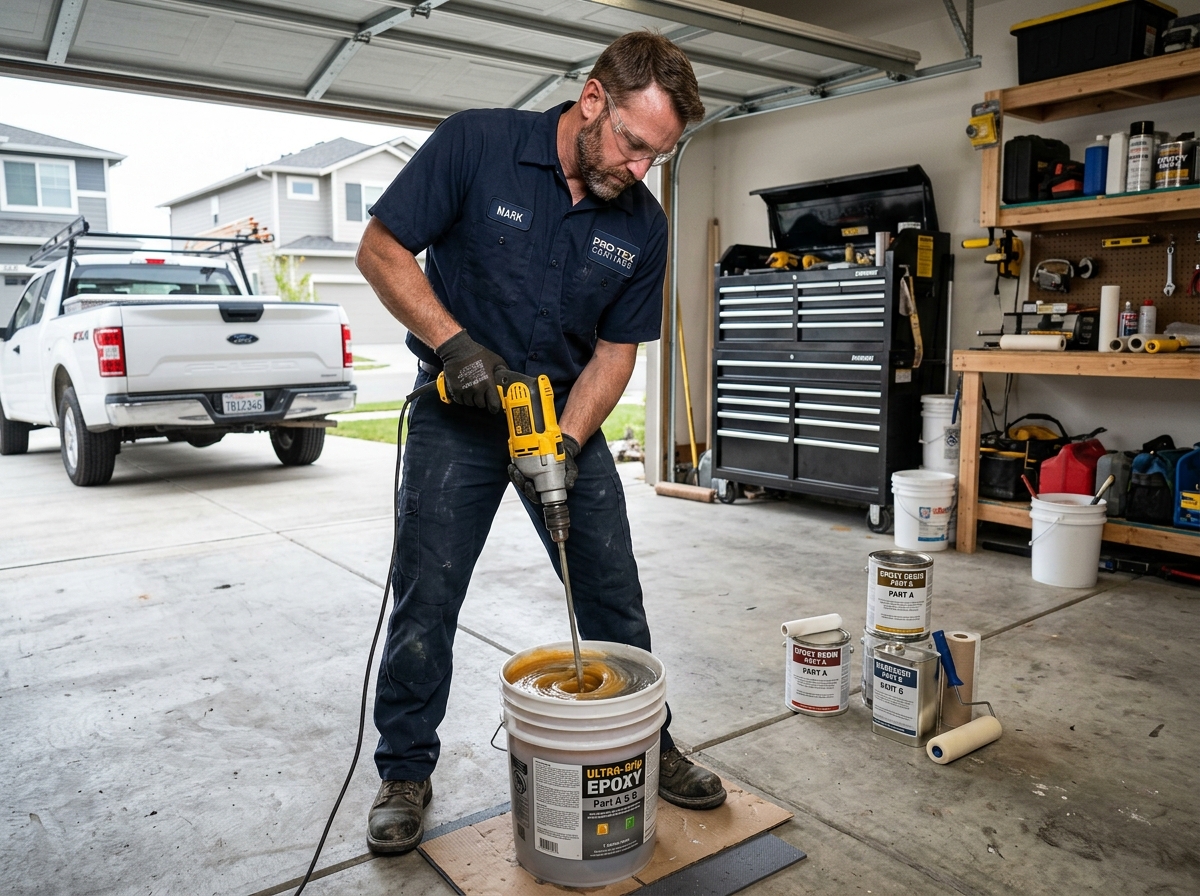
It’s tempting to grab a kit from a big-box store in Buford and spend a weekend doing it yourself. However, epoxy has a very limited “pot life.” Once you mix the two parts, the clock starts ticking. If the temperature is too high—a common occurrence during Georgia summers—the epoxy can “kick” (harden) in the bucket before you even get it on the floor.
Professional results require humidity control and precise timing. If you read a get your shine on with this epoxy floor painting guide, you’ll see that issues like bubbling, peeling, and uneven flake distribution are common DIY pitfalls.
When we broadcast flakes, we do it to “refusal,” meaning we cover every square inch of the wet epoxy. This creates a uniform, durable texture that is much harder to achieve when you’re rushing against a curing resin.
Enhancing Performance with Primers and Topcoats
A “one-coat” system is usually a recipe for disappointment. To truly transform your garage expert one-day garage coatings in Monroe GA, you need a multi-layer approach.
- Primers: These act as the “glue” between the concrete and the epoxy. They prevent the main coating from being absorbed too deeply into the slab.
- Topcoats: This is your wear layer. We typically use a high-performance urethane or polyaspartic topcoat. These materials are “military-grade” in their abrasion resistance. While a standard epoxy might have an abrasion loss of 30mg or more, our high-end topcoats can be as low as 4mg to 8mg. This means they can withstand years of dragging floor jacks and heavy toolboxes without scuffing.
Maintenance and Long-Term Durability
One of the best things about garage floor epoxy flooring is that it doesn’t ask for much. While a standard hardware store kit might last 2 or 3 years, a professional system from the 1 choice for epoxy garage floor coatings in Monroe GA can easily last 15 to 20 years.
To ensure that longevity, follow these simple maintenance tips:
- Sweep Regularly: Sand and grit can act like sandpaper under your tires. Keeping the floor clear of debris prevents micro-scratches.
- Use pH-Neutral Cleaners: Avoid harsh bleach or citrus-based cleaners, which can dull the finish over time. A simple mixture of warm water and a drop of dish soap or a dedicated floor cleaner is plenty.
- Address Spills: While the floor is chemical resistant, it’s always a good idea to wipe up battery acid or harsh solvents quickly to prevent any potential staining.
Safety and Slip Resistance in Garage Floor Epoxy Flooring
A common concern we hear in places like Dacula and Watkinsville is, “Isn’t epoxy slippery?” The short answer is: it can be, especially when wet. However, we never leave a floor completely smooth.
We use non-slip additives like aluminum oxide or fine quartz sand mixed into the final topcoat. These additives provide traction control without making the floor difficult to clean. It feels a bit like very fine sandpaper to the touch, providing peace of mind when you’re walking into the garage on a rainy Georgia afternoon.
Frequently Asked Questions about Garage Floor Epoxy
Is garage floor epoxy slippery when wet?
Standard high-gloss epoxy can be very slippery if it’s wet or oily. That is why we always recommend a slip-resistant additive in the topcoat. This creates a “grip” that makes the floor safe for foot traffic even if you’ve just driven in from a thunderstorm.
How long does an epoxy garage floor last?
When installed professionally with proper surface preparation (like diamond grinding) and high-quality 100% solids resins, you can expect 15 to 20 years of service. DIY kits typically fail within 1 to 3 years due to inferior materials and poor adhesion.
Can I apply epoxy over a previously painted floor?
We generally advise against it. Epoxy needs to bond to the concrete itself. If you apply it over old paint, the epoxy is only as strong as that old paint’s bond. We almost always grind away old paint or failing DIY coatings to ensure our new system has a “virgin” concrete surface to lock onto.
Conclusion
Your garage is more than just a place to park your car—it’s an extension of your home. Whether you’re in Monroe, Loganville, or Braselton, opting for high-quality garage floor epoxy flooring is the most effective way to protect your concrete and increase your property value.
At Creative Concrete Coatings, we bring over 25 years of experience and more than 455,000 square feet of installed excellence to every project. We understand the local climate and the specific needs of Georgia homeowners. We aren’t just applying a coating; we are providing a durable, long-term solution that we stand behind with a 100% satisfaction guarantee.
Ready to stop looking at those oil stains and start enjoying a showroom-quality floor? We’d love to help you transform your space.
Contact us today at https://cccoatings-ga.com/ to schedule your consultation!