
The Complete Breakdown of Garage Floor Painting Costs
Is Painting Your Garage Floor Worth the Investment?
Garage floor painting cost is one of the first things homeowners want to understand before tackling this kind of project. Here’s a quick snapshot to help you compare your options at a glance:
| Coating Option | Typical Cost Range (per sq ft) | Best For |
|---|---|---|
| Basic garage floor paint | Lower end of the spectrum | Budget-conscious, light use |
| Professional epoxy system | Mid range | Durability, chemical resistance |
| Polyurea / polyaspartic | Higher end | Long-term performance, UV stability |
A few key things to know upfront:
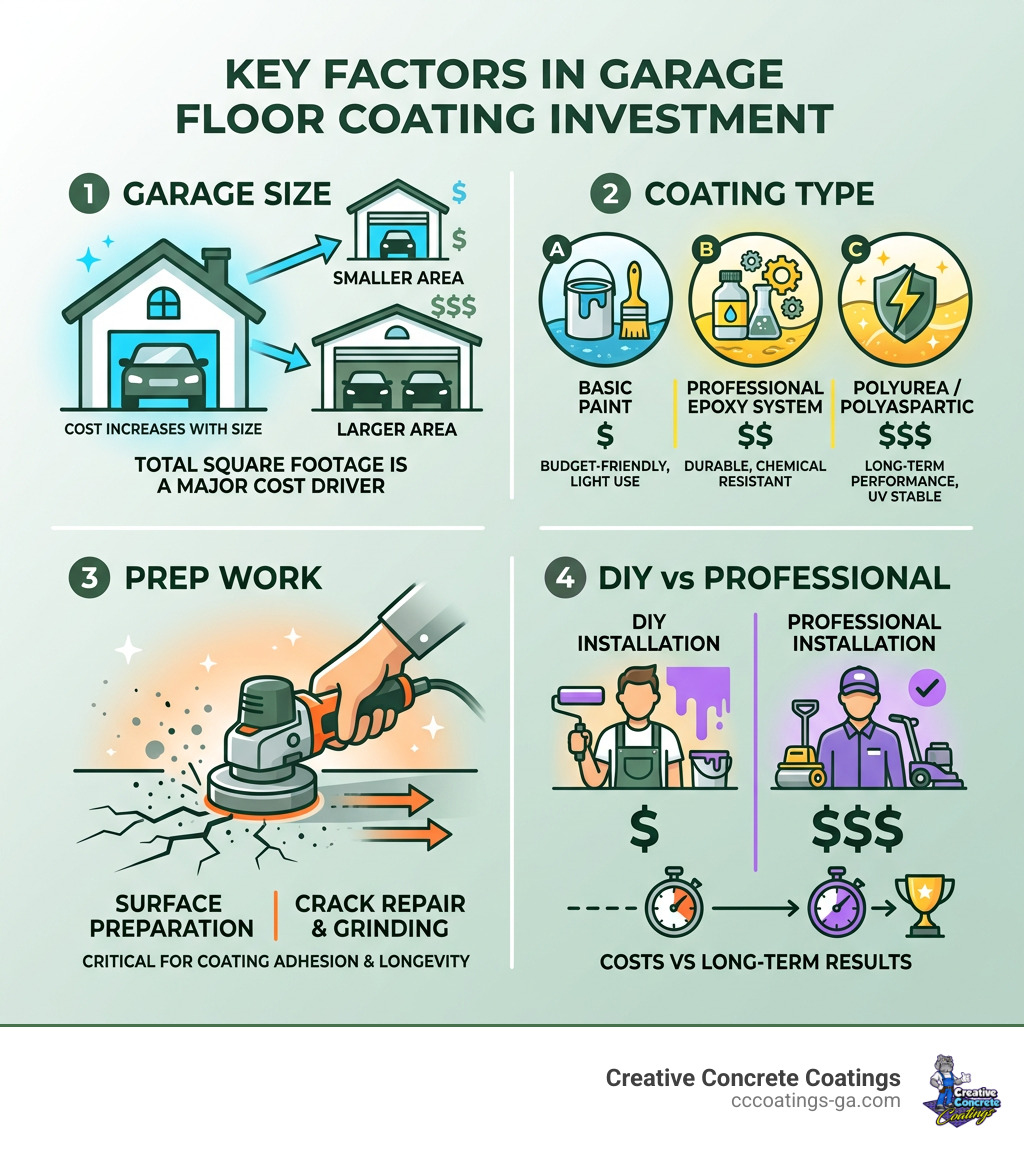
- Garage size is the biggest driver of total project cost
- Surface preparation (grinding, crack repair, cleaning) is often where quality is won or lost
- DIY vs. professional installation creates a significant difference in both price and long-term results
- Coating type matters – not all “garage floor paint” is created equal
The gap between a basic painted floor and a high-performance professional coating system is wide – in terms of both cost and longevity. Understanding that difference is what this guide is all about.
I’m Scott Shannon, owner of Creative Concrete Coatings and a Marine Corps veteran with decades of hands-on experience in concrete surfaces – including helping Georgia homeowners navigate every aspect of garage floor painting cost and coating selection. In this guide, I’ll walk you through everything you need to make a confident, informed decision for your garage.
Key Factors That Determine Your Garage Floor Coating Investment
When you start looking into the garage floor painting cost, it’s easy to get overwhelmed by the range of numbers you see online. In our experience serving homeowners from Monroe to Alpharetta, we’ve found that no two garages are exactly alike. The “investment” isn’t just about the liquid in the bucket; it’s about the labor, the technology of the materials, and the current state of your concrete.
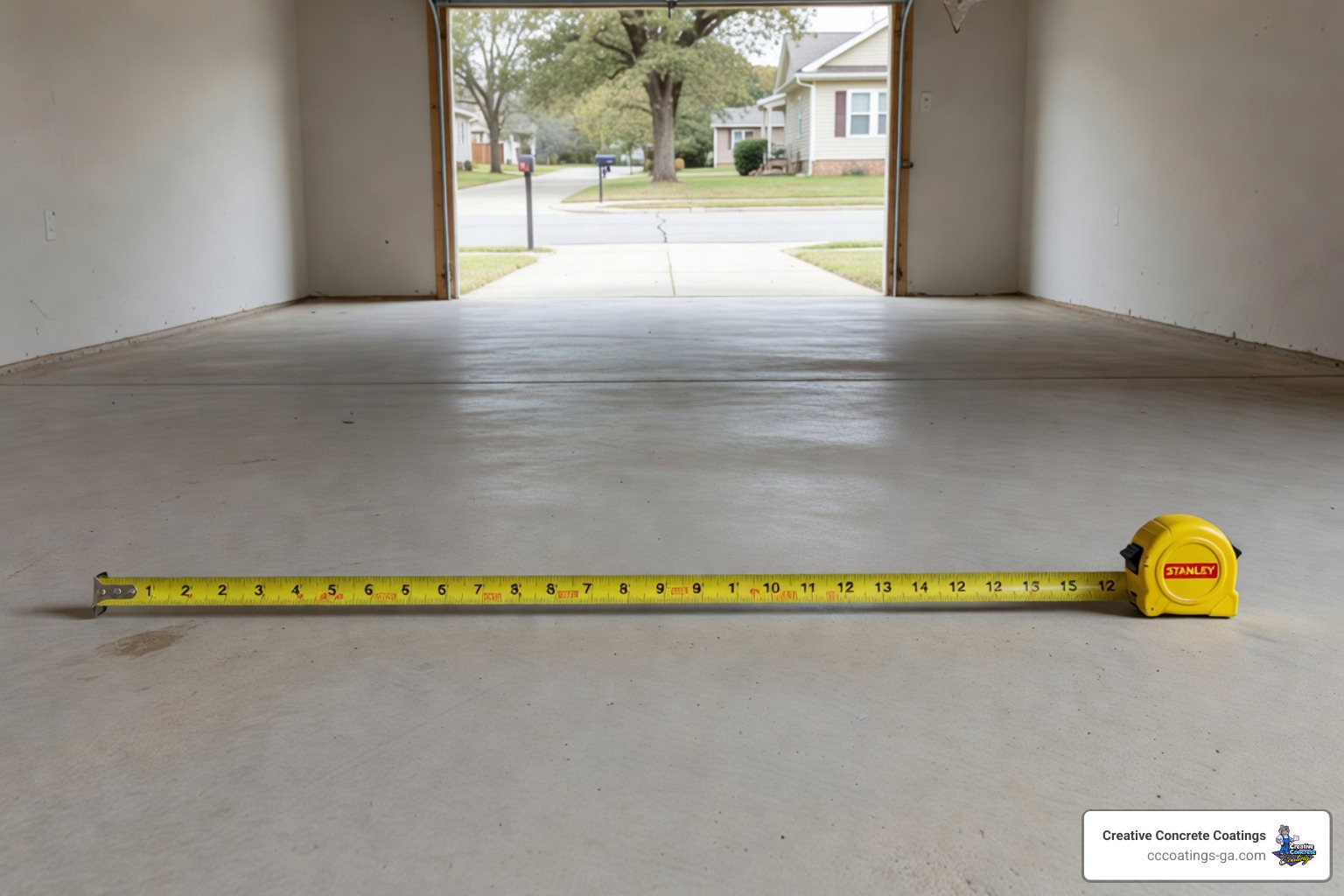
Several primary pillars support the total investment of a garage floor project:
- Square Footage: This is the most obvious factor. A larger canvas requires more material and more time.
- Labor Considerations: Professional labor involves more than just rolling on paint. It includes planning, setup, and meticulous cleanup. According to the Occupational Employment and Wage Statistics, labor rates for skilled trades vary by region, and in high-growth areas like North Georgia, demand for quality craftsmanship remains high.
- Material Quality: There is a massive difference between a “big box” store DIY kit and an industrial-grade resin. High-solids epoxies and polyaspartics offer a thickness and bond that standard paints simply cannot match.
- Condition of the Concrete: If your floor has spent the last twenty years soaking up oil leaks or has developed spiderweb cracks, the preparation work will be more intensive.
How Garage Size Impacts Garage Floor Coating Investment
Size is the foundation of your estimate. In Georgia, we typically see three standard garage configurations:
- One-Car Garage: Usually ranging from 240 to 380 square feet. These are often the most straightforward but may have a slightly higher “per square foot” rate because fixed costs (like travel and equipment setup) are spread over a smaller area.
- Two-Car Garage: The most common project we handle, typically between 400 and 600 square feet. These offer a great balance of scale and efficiency.
- Three-Car Garage: These large spaces (700 to 900+ square feet) require significant material volume. Interestingly, the per-square-foot investment often scales down slightly here because the crew is already on-site with all the heavy machinery.
Regardless of the size, the goal remains the same: a seamless, durable finish that protects the underlying slab for decades.
Professional Coating Systems and Their Investment Variations
Not all coatings are created equal. When you move beyond basic hardware store paint, you enter professional-grade systems.
- Two-Part Epoxy: This isn’t just “paint.” It’s a chemical reaction between a resin and a hardener. It creates a thick, plastic-like surface that is incredibly tough.
- Polyaspartic/Polyurea: These are the “gold standard” for many modern garages. They are more flexible than epoxy, which helps them move with the concrete during Georgia’s temperature swings. They also cure much faster.
- Coating Thickness: A professional system is often three to five times thicker than a coat of standard paint. This thickness is what allows the floor to hide minor imperfections and withstand the weight of heavy SUVs.
For those looking for a sleek, uniform look without the decorative flakes, you can learn more info about solid color industrial coatings to see how they provide a clean, professional aesthetic.
Understanding High-Performance Garage Floor Coatings
To truly understand why the garage floor painting cost varies so much, we have to look at the performance of the materials. A cheap paint might look good for a weekend, but a high-performance system is designed to look good for twenty years.
| Feature | Standard Garage Paint | Professional Epoxy | Polyaspartic / Polyurea |
|---|---|---|---|
| Durability | Low (peels easily) | High | Very High |
| Lifespan | 1–2 years | 5–10 years | 15–20+ years |
| Chemical Resistance | Poor | Good | Excellent |
| UV Stability | No (yellows) | Limited | 100% UV Stable |
| Cure Time | Days | 24–72 hours | 4–24 hours |
The Value of Professional Epoxy Systems
Epoxy has been the workhorse of the industry for a long time, and for good reason. It provides an incredible bond to concrete when the surface is prepared correctly. One of the biggest advantages of a professional epoxy system is its ability to incorporate decorative elements.
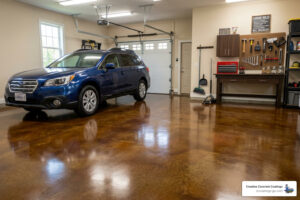
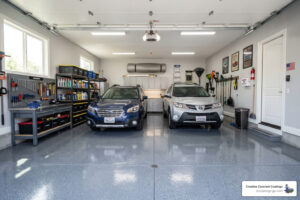
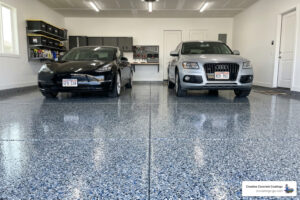
We often recommend flake floor systems for residential garages. These aren’t just for looks; the vinyl flakes add a layer of thickness and provide a slip-resistant texture that is vital when you’re walking into the garage on a rainy Georgia afternoon.
Professional systems also solve the dreaded “hot tire pickup.” This happens when your tires get hot from driving, park on a cheap painted floor, and literally pull the paint off the concrete as they cool and contract. High-quality resins are chemically engineered to resist this bond, ensuring your floor stays on the ground where it belongs. To see why this matters, check out The Best Garage Floor Epoxy to Make Your Neighbors Jealous.
Polyurea and Polyaspartic Alternatives
If you’re looking for the ultimate upgrade, polyurea and polyaspartic coatings are the answer. These materials were originally developed for industrial use—think bridges and factory floors—but they have been adapted for residential garages.
The biggest draw here is the one-day installation. While epoxy might require you to leave your cars in the driveway for a week, a polyaspartic system can often be installed in a single day, and you can drive on it the next morning. They are also 100% UV stable, meaning they won’t turn that ugly yellowish-brown color if your garage gets a lot of sunlight.
For a more minimalist, industrial look, you can find more info about grind and clear finishes, which highlight the natural character of your concrete while providing a bulletproof seal.
Professional Installation vs. DIY Projects
It’s tempting to look at a $100 DIY kit at a home improvement store and think you’re getting a bargain. However, when you factor in the garage floor painting cost over the lifetime of the floor, the “cheap” option often becomes the most expensive.
Labor Breakdown and Regional Factors
When you hire a professional team in areas like Suwanee or Lawrenceville, you aren’t just paying for someone to hold a roller. You are paying for:
- Industrial Equipment: We use heavy-duty diamond grinders that cost thousands of dollars to “open up” the pores of the concrete. A DIYer with a bottle of acid etch simply cannot achieve the same surface profile.
- Skill and Experience: Handling fast-curing resins requires a “clockwork” level of coordination. If you mess up the mix or take too long to roll it out, the floor is ruined.
- Regional Expertise: Georgia’s humidity and soil conditions (looking at you, red clay!) affect how concrete breathes and holds moisture. Professionals know how to test for these variables.
Hidden Risks of DIY Coating Applications
The most common call we get is from a homeowner whose DIY floor is peeling up after just six months. This usually happens for three reasons:
- Improper Prep: Acid etching (the common DIY method) often fails to remove old sealers or deep oil stains.
- Moisture Issues: Without professional moisture testing, you might be “trapping” water vapor under the coating, which will eventually blow the paint right off the surface.
- Low Solids Content: DIY kits are often “watered down” so they are easier for an amateur to apply. This results in a very thin layer that wears through quickly under the weight of a vehicle.
When you weigh the garage floor painting cost, a professional job comes with a warranty. If a DIY floor fails, you have to pay to have it professionally removed (which is expensive) before you can even start over.
Essential Surface Preparation and Additional Requirements
As we like to say in the industry, “The finish is only as good as the prep.” In fact, about 75% of the work we do happens before a single drop of coating touches the floor.
Concrete Repairs and Resurfacing
Most garage floors in Dacula or Loganville aren’t perfect. They have cracks from the house settling or “spalling” (where the top layer of concrete flakes away).
- Diamond Grinding: This is the most critical step. It removes the “laitance” (a weak, dusty top layer of concrete) and creates a texture like sandpaper that the coating can grab onto.
- Crack Filling: We don’t just paint over cracks. We use industrial-grade polyurea fillers that bond the concrete back together.
- Leveling: If your floor has low spots where water pools, we use leveling compounds to create a smooth, even surface.
To see the transformation process in action, read about our Expert One-Day Garage Coatings in Monroe, GA.
Sealing and Finishing Touches
Once the base coat is down, we add the layers that provide the “wow” factor and the long-term protection.
- Top Coat: This is a clear, hard-as-nails layer that protects the color or flakes from scratches and chemicals.
- Slip Resistance: We can add specialized aggregates to the top coat so your garage isn’t a skating rink when your shoes are wet.
- Moisture Testing: We always check the calcium chloride or relative humidity levels in your slab. If the moisture is too high, we use a specialized moisture-blocking primer to prevent future delamination.
Frequently Asked Questions about Garage Floor Coatings
How long does a professionally coated garage floor typically last?
A high-quality professional system, such as a polyaspartic or 100% solids epoxy, can easily last 15 to 20 years in a residential setting. With basic maintenance (just some soap and water), it will retain its gloss and protection for decades, whereas standard paint often needs to be redone every 2 years.
Can I drive on my garage floor immediately after coating installation?
No. While polyaspartic floors cure very quickly, we generally recommend waiting at least 24 hours for foot traffic and 48 to 72 hours before parking a heavy vehicle on it. Epoxy systems typically require a longer wait—usually 3 to 5 days—to ensure the chemical bond is fully “locked in.”
What makes professional garage floor coatings a superior investment?
It comes down to “Total Cost of Ownership.” While the initial garage floor painting cost for a professional system is higher than a DIY kit, you only have to do it once. You get a floor that is easy to clean, resists chemicals, increases your home’s value, and—most importantly—doesn’t peel up under your tires.
Conclusion
Investing in your garage floor is about more than just aesthetics; it’s about protecting one of the largest surfaces in your home. Whether you are in Monroe, Watkinsville, or Johns Creek, a professional coating provides a level of durability that standard paint simply cannot match.
At Creative Concrete Coatings, we bring over 25 years of experience and more than 455,000 square feet of installed excellence to every project. As a veteran-owned business based right here in Monroe, GA, we pride ourselves on 100% customer satisfaction and floors that stand the test of time.
Don’t settle for a floor that will peel by next season. Get a free estimate for your garage floor today and let us help you transform your space into something you can be proud of.