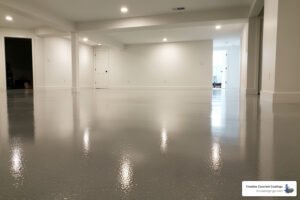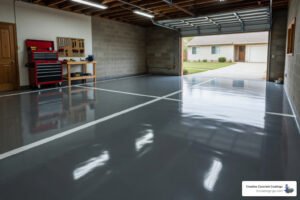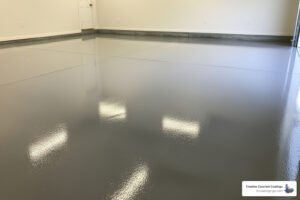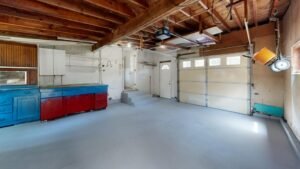

Top Rated Products for the Best Epoxy Paint for Basement Floor
Your Basement Floor Deserves Better: A Quick Guide to the Best Epoxy Options
The best epoxy paint for basement floor applications comes down to choosing the right system that balances moisture resistance, durability, and ease of application.
Common types of epoxy coatings for basement floors:
- 1-Part Epoxy: Best for budget-friendly, light-use spaces.
- 2-Part Epoxy Kits: Popular for DIY projects in average basements.
- 100% Solids Epoxy: The professional choice for high-traffic and long-term durability.
- Industrial-Grade Coatings: Used for heavy-use basements and commercial-grade protection.
Basement floors take a beating. Moisture seeps up from below. Humidity hangs in the air. Foot traffic, storage loads, and the occasional chemical spill all wear down bare concrete fast.
Epoxy coatings solve most of these problems in one application — creating a seamless, non-porous barrier that resists moisture, blocks mold, and holds up under serious use.
But not all epoxy products are the same. A thin water-based paint from a big-box store performs very differently from a professional-grade 100% solids system. Choosing the wrong one for your specific basement conditions — especially if you have humidity or moisture issues — can lead to bubbling, peeling, and an expensive do-over.
This guide breaks down the top-rated options so you can choose the right product for your basement, your budget, and your goals.
Why Epoxy is the Best Solution for Basement Floors
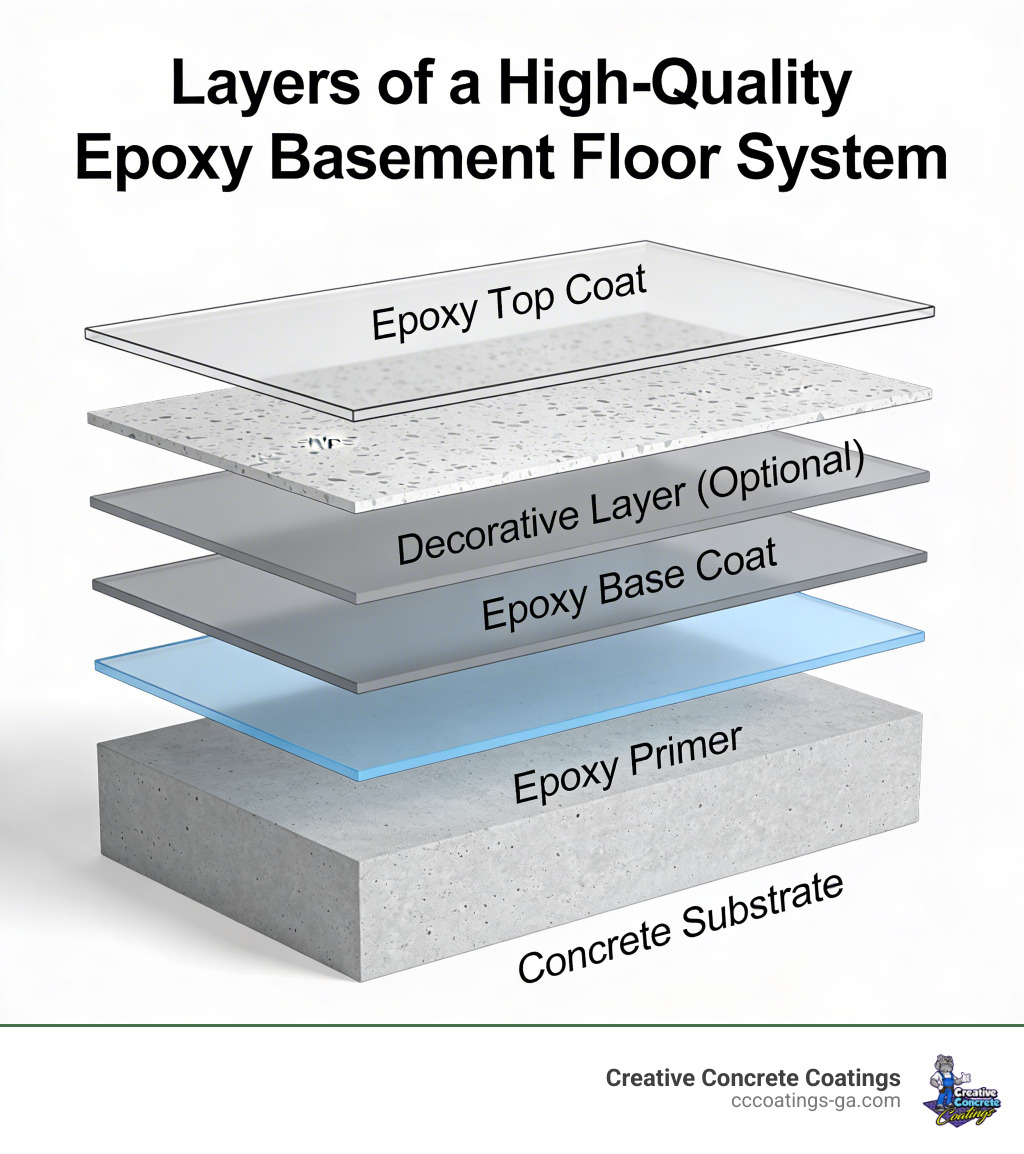
When we talk about finishing a basement, the floor is often the biggest challenge. Standard concrete is porous, meaning it acts like a sponge for moisture, dust, and odors. By applying a professional-grade epoxy coating, you are effectively “plasticizing” your floor, turning a dusty slab into a high-performance surface.
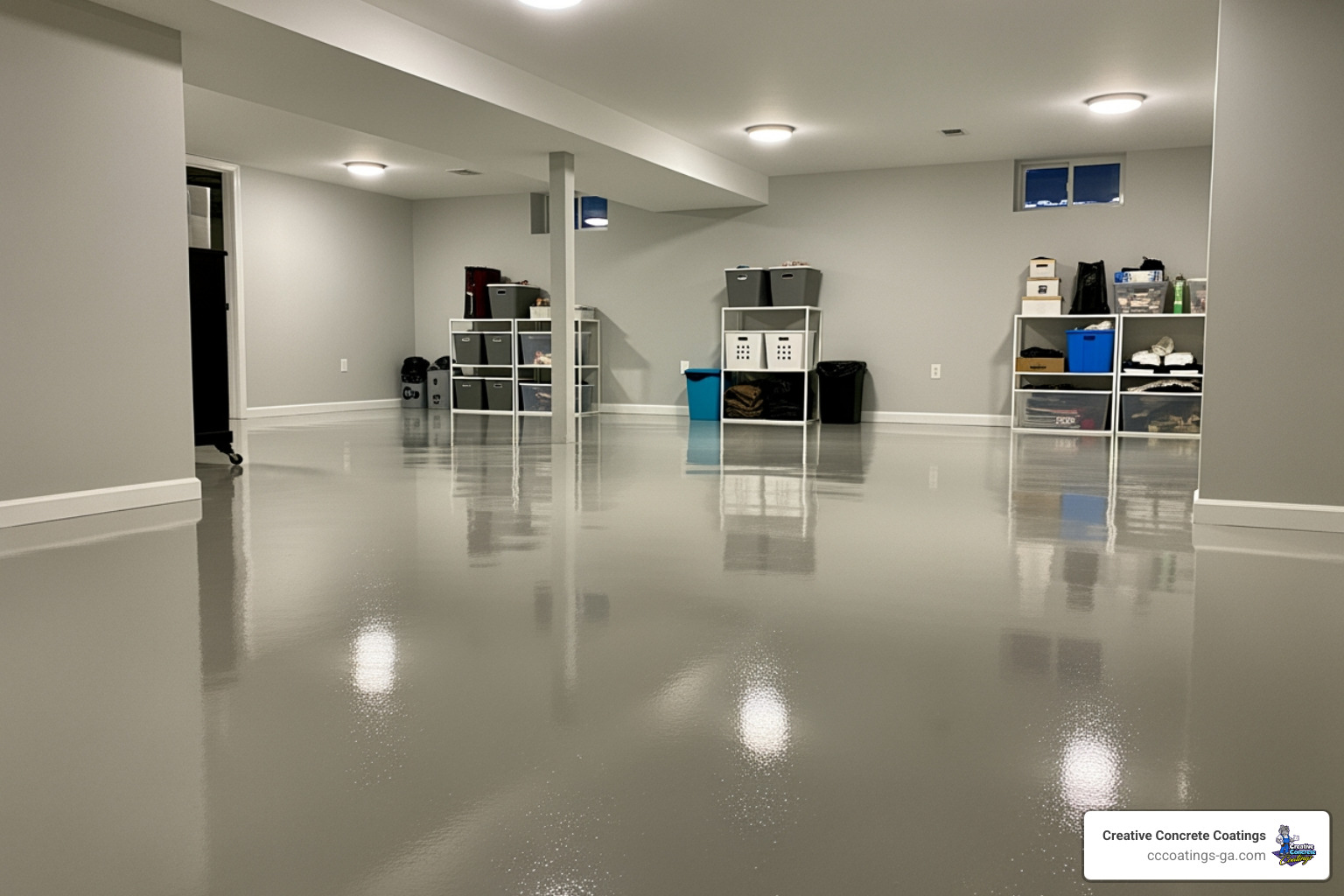
The benefits of using the best epoxy paint for basement floor projects include:
- Moisture and Mold Resistance: Basements are naturally damp. Epoxy creates a non-porous waterproof barrier that prevents moisture from seeping through the concrete. This environment is hostile to mold and mildew, which often thrive under carpet or wood flooring.
- Superior Durability: Unlike standard latex paint that chips if you drop a wrench, epoxy is a thermoset polymer. It undergoes a chemical reaction to bond with the concrete, creating a surface that can handle heavy storage racks, home gym equipment, and constant foot traffic.
- Dust Reduction: Concrete “chalks” over time, creating a fine white dust that settles on everything. Epoxy seals the surface completely, making your basement much cleaner and healthier.
- Aesthetic Versatility: You aren’t stuck with “basement gray.” From Solid Color Industrial Coatings to decorative flakes, you can match your floor to any interior design.
Compared to other options like simple sealers, epoxy offers a thicker “build” that can hide minor imperfections in older concrete, which is common in many Georgia homes from Monroe to Alpharetta.
Key Considerations for Choosing the Best Epoxy Paint for Basement Floor
Before you grab a roller, we need to talk about the “science” of your basement. Not every product works in every environment.
The Moisture Factor
The biggest enemy of any floor coating is hydrostatic pressure. This is the force of water in the ground pushing up against your foundation. If your basement is prone to dampness, a standard DIY kit might blister. We always recommend a moisture resistance test. Simply tape a 12×12 inch piece of plastic sheeting to the floor for 24 hours. If there is condensation under the plastic when you peel it up, you have a moisture issue that needs professional mitigation before any coating is applied.
Slip Resistance
A glossy floor looks beautiful, but it can be like an ice rink if it gets wet near a sump pump or laundry area. Look for products that allow for anti-slip additives—usually a fine aluminum oxide or quartz sand—to provide traction.
High-Build vs. Self-Leveling Systems
When shopping for the best epoxy paint for basement floor, you’ll see terms like “high-build” and “solids content.”
- High-Build Epoxy: These are typically 2-3 millimeters thicker than standard paints. They are excellent for heavy-use areas like workshops or home gyms.
- Self-Leveling Epoxy: If your basement floor is slightly uneven or pitted, self-leveling systems flow into the low spots to create a perfectly flat surface. This is a favorite for finished living spaces.
For those who want a clean, minimalist look without the high gloss of resin, our Grind and Clear Concrete Services offer a fantastic alternative that highlights the natural beauty of the concrete while providing a protective seal.
Decorative and Functional Additives
You don’t have to settle for a flat, hospital-like floor. Flake Floor Coatings are incredibly popular in Georgia basements. By broadcasting vinyl chips into the wet epoxy, you create a multi-colored finish that hides dirt, salt, and minor floor imperfections. You can browse Our Colors to find a blend that fits your style, whether you’re in Loganville or Suwanee.
Professional Installation vs. DIY Basement Kits
It is tempting to look at a $100 kit at a big-box store and think, “I can do that this weekend.” While DIY is possible, there is a massive gap in quality and longevity.
The Prep is 80% of the Job
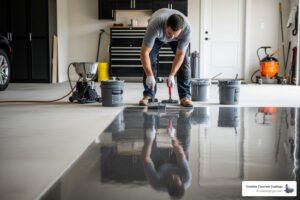
A DIY kit usually comes with a small bag of citric acid for “etching.” In our 25+ years of experience, we’ve found that acid etching is often insufficient for a long-term bond. Professionals use industrial diamond grinders to mechanically “open” the pores of the concrete. This creates a profile (like sandpaper) that allows the epoxy to “root” into the slab.
If you are working in an older home, you must also be aware of EPA guidelines on lead dust safety if there is old paint on the floor. Scraping or sanding without proper HEPA filtration can be a health hazard.
Why Hire a Pro?
When you look at Who Installs Epoxy Floors in Monroe GA, you aren’t just paying for the labor; you’re paying for industrial-grade materials.
- DIY Kits: Often water-based with 40-60% solids. As the water evaporates, the coating shrinks and leaves a thin film (3-5 mils).
- Professional Systems: Usually 100% solids epoxy. What goes on the floor stays on the floor, resulting in a thick, durable shield (10+ mils).
Understanding Cure Times and Pot Life
Epoxy is a chemical reaction. Once you mix the resin and the polyamine hardener, the clock starts ticking. This is called “pot life.” For many high-end epoxies, you only have 20–35 minutes to get the product on the floor before it hardens in the bucket. This is where many DIYers panic and end up with roller marks or uneven thickness.
Frequently Asked Questions about Basement Epoxy
How long does it take for the best epoxy paint for basement floor to cure?
Curing is different from drying. While a floor might feel dry to the touch in 8–12 hours, the chemical cross-linking takes longer.
- Foot Traffic: Usually safe after 24–48 hours.
- Furniture/Heavy Equipment: Wait 72 hours.
- Full Chemical Cure: Can take up to 7–10 days. During this time, avoid cleaning with chemicals or parking a vehicle (if it’s a walk-out basement) to prevent “hot tire pickup.”
Can epoxy be applied to a damp basement floor?
The short answer is: No. Applying epoxy over a damp floor is the number one cause of floor failure. The moisture trapped underneath will turn into vapor, creating pressure that causes the epoxy to blister and peel. If you have active leaks or high hydrostatic pressure, you must resolve those issues with professional waterproofing first. Check out our Frequently Asked Questions for more on moisture testing.
What maintenance is required for epoxy floors?
One of the best parts of an epoxy floor is how easy it is to clean. Because it’s a seamless surface, there’s nowhere for dirt to hide.
- Dust Mop: Use a microfiber dust mop weekly to remove grit that can act like sandpaper.
- Gentle Cleaning: Use a pH-neutral cleaner mixed with warm water. Avoid citrus or vinegar-based cleaners, as the acid can dull the finish over time.
- Spill Management: Wipe up oils or chemicals promptly. While epoxy is resistant, leaving harsh chemicals to sit for days can eventually cause staining.
You can see examples of how well these floors hold up over time in Our Gallery.
Conclusion: Transform Your Space with Creative Concrete Coatings
Choosing the best epoxy paint for basement floor projects is about more than just a color choice—it’s about protecting your home’s foundation and expanding your usable living space. Whether you’re turning your basement into a home office in Johns Creek, a gym in Dacula, or a workshop in Athens, the right coating makes all the difference.
At Creative Concrete Coatings, we bring over 25 years of experience and 455,000+ square feet of installed excellence to every project. We understand the specific challenges of Georgia concrete, from high humidity to red clay stains. We serve homeowners and businesses across Monroe, Suwanee, Hoschton, Lawrenceville, and beyond with a 100% satisfaction guarantee.
Don’t settle for a thin DIY film that will peel in two years. Invest in a floor that lasts a lifetime.
Ready to upgrade your basement? Contact Us today for a free consultation and let us help you create a floor you’ll love.