Why the Best Epoxy for Garage Floor Matters More Than You Think
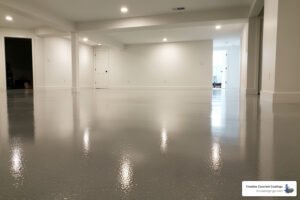
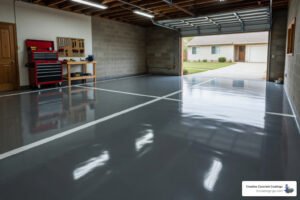
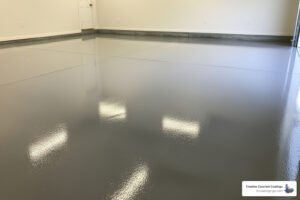
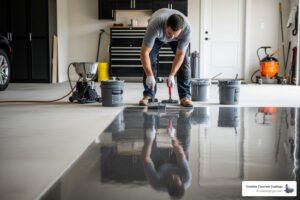
The best epoxy for garage floor applications can completely transform a dull, stained slab into a durable, high-gloss surface that holds up to vehicles, chemicals, and years of daily wear.
Here is a quick look at the top options:
| Coating Type | Best For | Key Benefit |
|---|---|---|
| 100% Solids Epoxy | Damaged or porous concrete | Maximum thickness, no shrinkage |
| Polyurea | Most residential garages | Fast cure, flexible, UV stable |
| Polyaspartic | High-gloss topcoat finish | Durable, chemical resistant, clear |
| Epoxy + Urethane Topcoat | Heavy-use workshops | Multi-layer protection, long lifespan |
Most homeowners grab a kit from the hardware store, apply it, and end up right back where they started within a year or two. The problem is not effort — it is using the wrong product on an unprepared surface.
A properly installed, multi-layer coating system using high-solids materials can look brand new 15 years later. A low-quality water-based kit? You may be redoing it before the year is out.
The difference comes down to a few key factors: solids content, mil thickness, surface prep, and topcoat quality. Get those right, and your garage floor becomes one of the most durable surfaces in your home.
I’m Scott Shannon, owner of Creative Concrete Coatings and a U.S. Marine Corps veteran with decades of hands-on experience in construction and coatings — and helping Georgia homeowners find the best epoxy for garage floor systems is something I do every day. Let’s break down exactly what to look for so you make the right call the first time.
Choosing the Best Coating for Garage Floor Systems
When we talk about the epoxy systems used in professional garages, we aren’t talking about simple floor paint. True resin coatings are the result of a chemical reaction between a resin and a hardener. When mixed, these two components bond to create a rigid, plastic-like surface that is incredibly strong.
The reason these systems are so popular across Georgia—from Monroe to Alpharetta—is their sheer resilience. A high-quality coating provides exceptional durability and resistance to the typical “garage enemies”: oil leaks, gasoline spills, brake fluid, and road salt brought in during the winter.

What Defines the Best Garage Floor Coating for Durability?
To find the best epoxy for garage floor longevity, you have to look at the “solids content.” This refers to how much of the product stays on the floor after it dries.
- Water-based epoxies (often found in big-box DIY kits) are usually only 40% to 50% solids. The rest is water that evaporates, leaving behind a very thin, brittle film.
- 100% solids epoxy contains no carriers that evaporate. If you apply 10 mils of wet product, you get 10 mils of dry product. This results in a coating that is roughly 10x thicker and significantly more abrasion-resistant.
At Creative Concrete Coatings, we focus on high-build systems because they offer a superior Expert One-Day Garage Coating Services in Monroe, GA. A thicker floor isn’t just for show; it hides minor concrete imperfections and provides a “wear layer” that can handle heavy traffic without peeling.
Selecting the Best Garage Floor Coating for Your Use Cases
Not every garage has the same needs. We categorize garage use into three main levels:
- Light Traffic: Primarily used for parking a daily driver and light storage. A standard high-solids epoxy or polyurea system works beautifully here.
- Heavy Vehicles/SUVs: Large trucks and SUVs put immense pressure on a floor. You need a system with high “mil thickness” to prevent the coating from compressing or cracking under the weight.
- Workshop/Hobbyist Use: If you’re dropping heavy tools, using floor jacks, or dealing with welding splatter, you need an industrial-grade system with an abrasion-resistant topcoat.
Comparing High-Performance Coatings: Epoxy vs. Polyurea and Polyaspartic
While “epoxy” is the household name, modern technology has given us even better options. In fact, many of the Expert One-Day Garage Coating Services in Monroe, GA we perform utilize polyurea and polyaspartic technology.
Polyurea is a subgroup of polyurethane. It is much more flexible than traditional epoxy. Why does that matter? Concrete moves. It expands and contracts with the Georgia humidity and temperature swings. Because polyurea is flexible, it can move with the concrete rather than cracking.
Polyaspartic is essentially a “fast-cure” version of polyurea. It is incredibly UV stable, meaning it won’t turn yellow if your garage door stays open and the sun hits the floor. It’s also much harder than epoxy, offering superior chemical resistance.
Understanding Hot Tire Pickup Resistance
If you’ve ever seen an epoxy floor where the coating has peeled away exactly where the car tires sit, you’ve seen “hot tire pickup.” This happens when tires get hot from driving on the highway. When you park, the heat softens low-quality epoxy. As the tires cool, they literally shrink and grab the coating. When you pull out the next morning—rip—the floor comes with the tire.
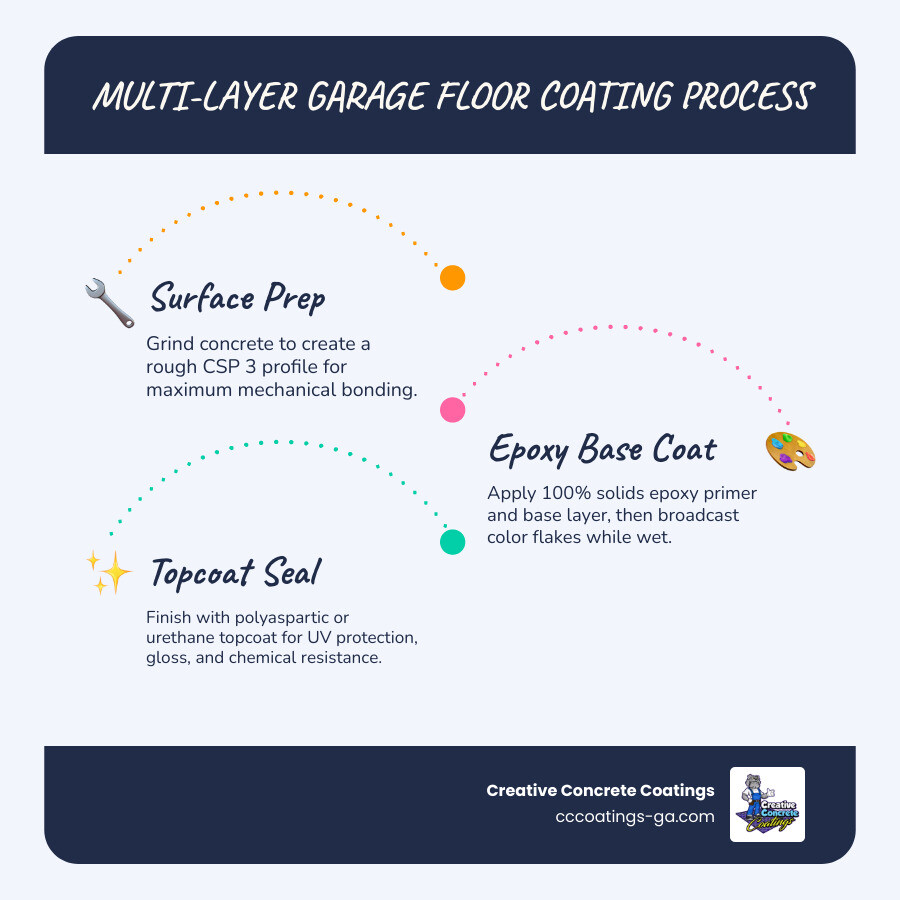
The best epoxy for garage floor systems uses an aliphatic urethane or polyaspartic topcoat. These materials are chemically engineered to resist heat softening, ensuring your floor stays bonded to the concrete regardless of how hot your tires are.
Fast-Cure Alternatives for One-Day Installation
One of the biggest complaints about traditional epoxy is the wait time. It can take 3 to 7 days to fully cure. With our One-Day Garage Coatings in Monroe, GA, we use advanced polyurea-polyaspartic blends (sometimes called CycloSpartic™ technology).
These systems allow us to:
- Apply the base coat and flakes in the morning.
- Apply the topcoat in the afternoon.
- Have you walking on the floor in just a few hours.
- Have your car back in the garage within 24 to 48 hours.
Essential Preparation and Application Steps for a Flawless Finish
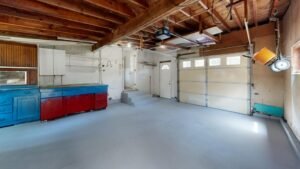
You could buy the highest-grade resin in the world, but if your floor isn’t prepared correctly, it will fail. adhesion is the most critical part of the process. The coating needs to “bite” into the concrete.
Surface Preparation: The Superiority of Mechanical Grinding
Many DIY kits tell you to use acid etching. We strongly advise against this for most residential garages. Acid etching is inconsistent and often doesn’t open the “pores” of the concrete deep enough. Plus, it introduces moisture into a floor you are trying to keep dry.
We use professional diamond grinding. This mechanical process removes the top layer of “laitance” (dusty, weak concrete) and creates a surface profile similar to 100-grit sandpaper. This allows our Grind and Clear or flake systems to form a permanent mechanical bond with the slab.
Curing Times and Environmental Factors
If you are building a new home in Loganville or Braselton, patience is a virtue. New concrete must cure for a minimum of 28 to 29 days before any coating is applied. This allows the moisture to escape and the pH levels to stabilize.
Applying a coating too early traps moisture, which leads to “osmotic blistering”—those annoying little bubbles that eventually pop and peel. We always perform moisture testing to ensure your slab is ready for Who Installs Epoxy Floors in Monroe, GA That Can Handle Heavy Traffic and Still Look Great?
Customizing the Best Garage Floor Coating for Aesthetics
The “wow factor” usually comes from the Flake Floor system. This involves broadcasting decorative vinyl chips into the wet base coat until the floor is completely covered.
You can check out Our Colors or view our Gallery to see the variety. Beyond just looking like granite or terrazzo, these flakes serve two functional purposes:
- Impact Resistance: They add another layer of thickness to protect the concrete.
- Slip Resistance: The texture of the flakes, combined with anti-skid additives in the topcoat, keeps the floor from becoming a skating rink when wet.
High-Quality Topcoats and Warranties
A “military-grade” topcoat is what separates a 2-year floor from a 20-year floor. Abrasion resistance is measured by “mg loss.” A standard hardware store kit might lose 30mg or more in a standardized test. Our high-performance topcoats often lose as little as 4mg. That is a massive difference in how the floor will look after years of foot traffic and sliding toolboxes.
We are so confident in these systems that we offer a lifetime residential warranty against peeling and delamination. We want your floor to be the last one you ever have to install.
Troubleshooting Common Installation Issues
Even with the best epoxy for garage floor materials, things can go wrong if you aren’t careful.
- Bubbling: Often caused by “outgassing,” where air escapes the concrete as the temperature rises. Applying coatings while the garage is cooling down helps prevent this.
- Peeling: Usually a sign of poor prep or oil contamination.
- Poor Adhesion: Often happens when the “pot life” (the time you have to work with the mixed epoxy) is exceeded. If the epoxy starts to get hot in the bucket, it’s already curing and won’t bond properly.
For high-use areas, we sometimes recommend a Solid Color Industrial system, which uses a thicker pigmented base without flakes for a clean, professional look.
Frequently Asked Questions about Garage Floor Coatings
How long should new concrete cure before applying a coating?
As mentioned, 28 days is the industry standard. This ensures the hydration process is complete and the moisture content is low enough (typically below 4%) to prevent adhesion failure.
Why are 100% Solids and Advanced Coatings Preferred Over Water-Based Options?
Water-based coatings are thin. When the water evaporates, the remaining film is barely thicker than a piece of paper. 100% solids and polyurea systems provide a thick, “high-build” protective layer that can actually strengthen the surface of your concrete.
How do I maintain my garage floor coating to last 20 years?
It’s easier than you think!
- Sweep regularly: Dirt and grit act like sandpaper under your tires.
- Mop occasionally: Use a mixture of warm water and a non-bleach, pH-neutral cleaner (like Simple Green or ammonia).
- Rinse: A quick spray with a hose and a squeegee will keep it looking like a Transform Your Garage: Expert One-Day Garage Coatings in Monroe, GA.
Conclusion
Finding the best epoxy for garage floor protection doesn’t have to be a guessing game. By focusing on mechanical preparation, high-solids materials, and professional-grade topcoats, you can create a space that is as functional as it is beautiful.
At Creative Concrete Coatings, we bring over 25 years of experience and more than 455,000 square feet of installed excellence to every job. Whether you’re in Monroe, Athens, or Buford, we are committed to 100% satisfaction.
Ready to make your neighbors jealous? We are The #1 Choice for Epoxy Garage Floor Coatings in Monroe, GA. Give us a call, and let’s give your garage the upgrade it deserves.