Is Epoxy Coating for Driveways the Right Choice? Here’s What You Need to Know
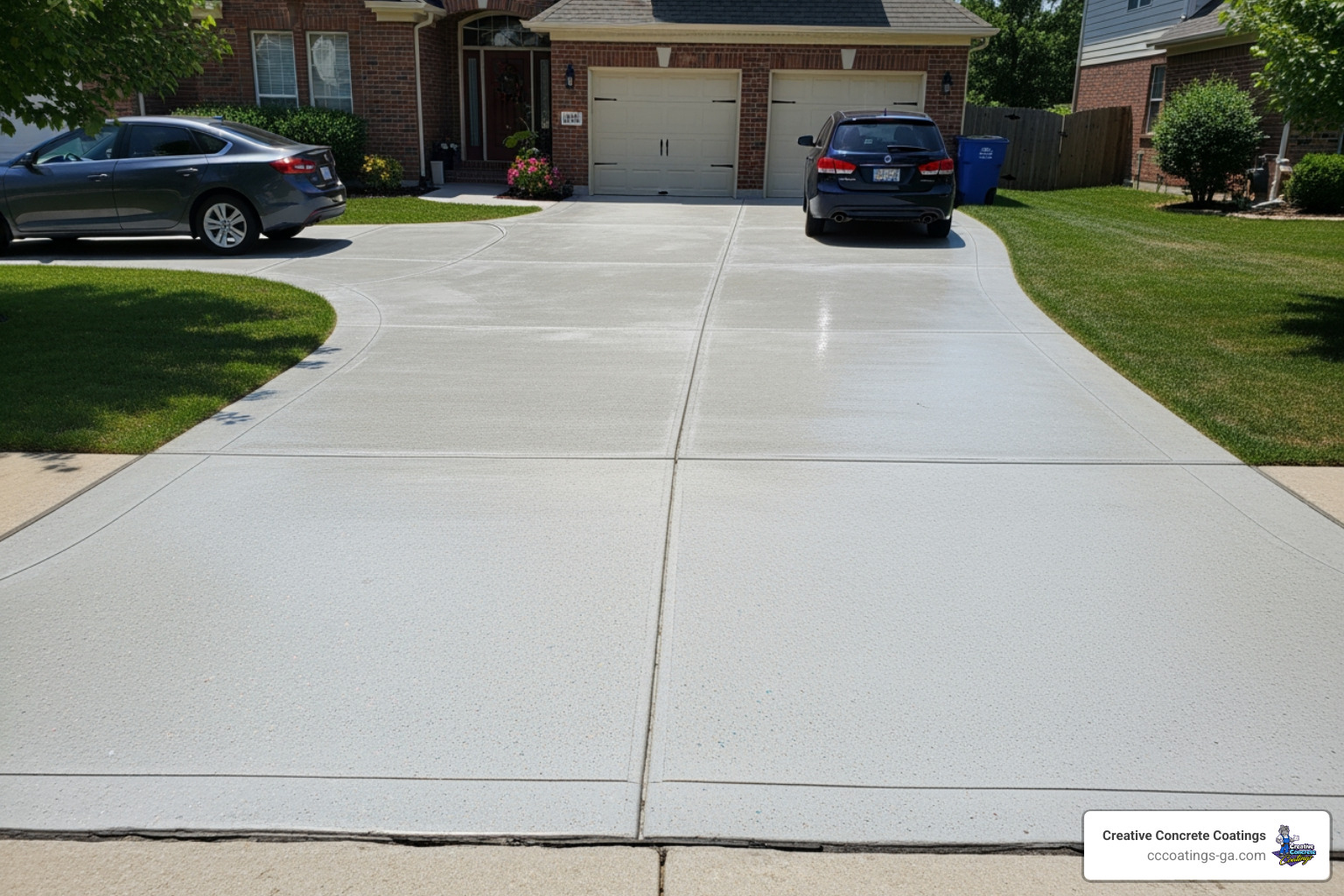
Epoxy coating for driveways is one of the most durable, low-maintenance ways to protect and beautify concrete — and yes, it deserves serious consideration if your driveway is cracked, stained, or just plain worn out.
Quick answers for homeowners evaluating driveway coatings:
- What it is: A two-part system (resin + hardener) that bonds chemically to concrete, creating a hard, protective surface
- How long it lasts: Up to 20 years with proper prep and maintenance
- Best for: Concrete driveways in good structural condition
- Key benefits: Resists oil, chemicals, and heavy vehicle traffic; easy to clean; improves curb appeal
- Main limitations: Can yellow under UV exposure without a protective topcoat; moisture in the slab can cause adhesion problems
- DIY or pro?: DIY kits exist, but professional installation is strongly recommended for driveways due to the prep work involved
Your driveway is the first thing people see when they visit your home. A cracked, stained, faded slab doesn’t exactly make a great first impression. But beyond looks, an unprotected concrete driveway is constantly under attack — from oil drips, Georgia heat, heavy vehicles, and seasonal moisture.
The good news? The right coating can change all of that.
This guide walks you through everything you need to evaluate epoxy driveway coatings — from how they work to how they hold up in real-world conditions and how they compare to alternatives like polyaspartic.
I’m Scott Shannon, owner of Creative Concrete Coatings and a Marine Corps veteran with decades of hands-on experience in construction and concrete coatings — including epoxy coating for driveways across residential and commercial properties throughout Georgia. Every project we take on is built on the same principles I learned in the Corps: discipline, integrity, and doing the job right the first time.
What is Epoxy Coating for Driveways?
When we talk about an epoxy coating for driveways, we aren’t talking about the “driveway paint” you see on the bottom shelf of a big-box hardware store. True epoxy is a sophisticated chemical powerhouse. It consists of two main parts: an epoxide resin and a polyamine hardener. When these two components are mixed, they trigger an exothermic (heat-generating) chemical reaction.
This reaction doesn’t just “dry” like paint; it cures. During this process, the mixture forms a molecular bond with the concrete substrate, essentially becoming a part of the floor itself. This creates a surface that is significantly tougher than the concrete beneath it. While products like Shield-Crete Water-Based Epoxy offer a great option for certain indoor applications, professional-grade outdoor systems are typically much thicker.
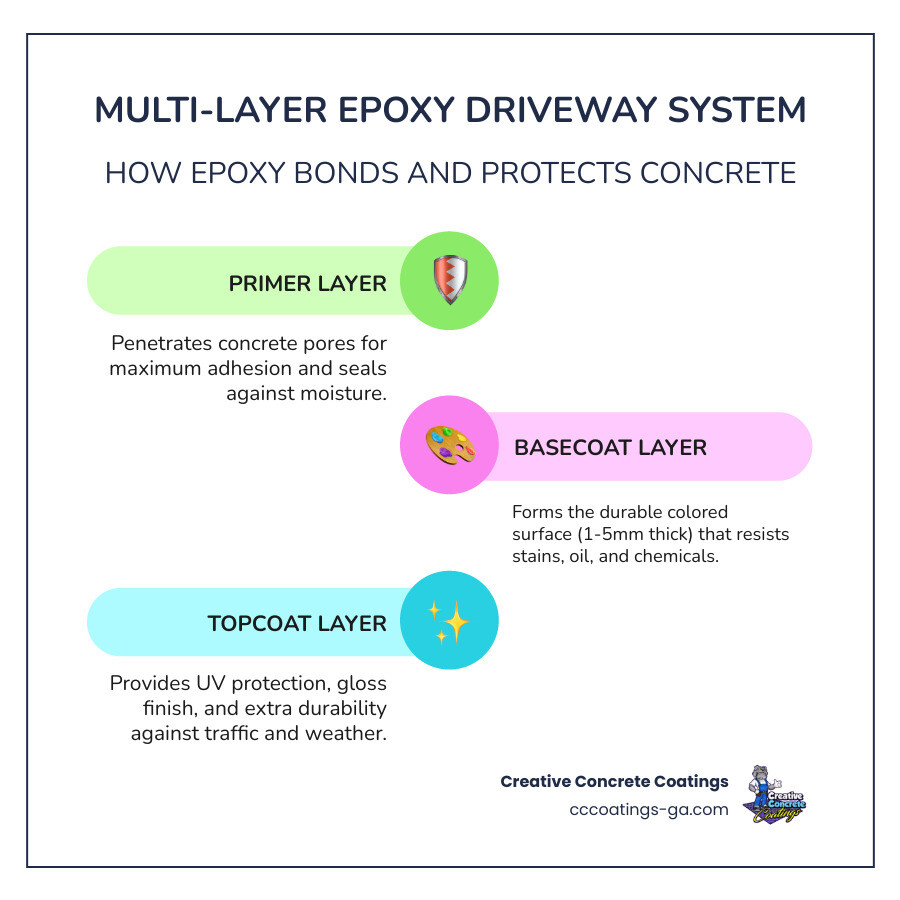
In fact, a professional epoxy concrete coating generally consists of three distinct layers, with a combined thickness ranging from 1mm to 5mm. Compare that to a thin layer of paint which is only a fraction of a millimeter thick, and you can see why epoxy is the heavyweight champion of floor protection.
Customization and Aesthetics
One of the biggest reasons homeowners in Monroe and Alpharetta choose epoxy is the sheer variety of looks you can achieve. You aren’t stuck with “sidewalk gray” anymore.
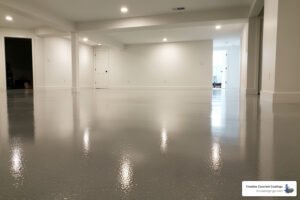
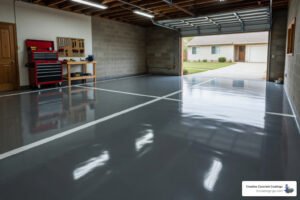
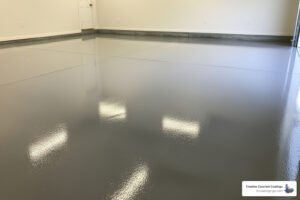
By exploring Our Colors, you’ll see that the sky is the limit. Most modern driveways utilize a Flake Floor system. This involves broadcasting decorative vinyl chips into the wet epoxy basecoat. These flakes do more than just look pretty; they add texture and hide minor imperfections in the concrete. For even more durability and a “stone-like” feel, we can use quartz aggregates. Whether you want a subtle earth-tone matte finish or a high-gloss “biotech lab” shine, we can tailor the system to match your home’s architecture.
The Benefits of Professional Epoxy Coating for Driveways
Why go through the effort of coating your driveway? Because concrete is essentially a giant, hard sponge. It’s porous, meaning it sucks up oil, gasoline, and water, leading to deep stains and “spalling” (surface peeling).
An epoxy coating for driveways acts as a permanent shield. Here are the primary benefits:
- Extreme Durability: Properly installed systems can last 20 years or more. They are designed to handle the weight of heavy SUVs and the friction of turning tires without flaking or peeling.
- Stain and Chemical Resistance: Have an old truck that drips oil? With epoxy, that oil beads up like water on a waxed car. You can simply use a dust mop or a broom to clean the stains or wipe them away with a rag.
- Impact Resistance: Dropping a heavy tool or a floor jack won’t chip the surface the way it would bare concrete.
- Curb Appeal: It transforms a dull, cracked slab into a high-end design feature.
If you are wondering Who Installs Epoxy Floors in Monroe GA that can handle this kind of abuse, look for contractors who emphasize the “build” of the floor—meaning the thickness of the layers applied.
Potential Limitations and Climate Challenges
While we love epoxy, we believe in being 100% honest with our neighbors in Georgia. Epoxy is a fantastic material, but it isn’t “set it and forget it” in every environment.
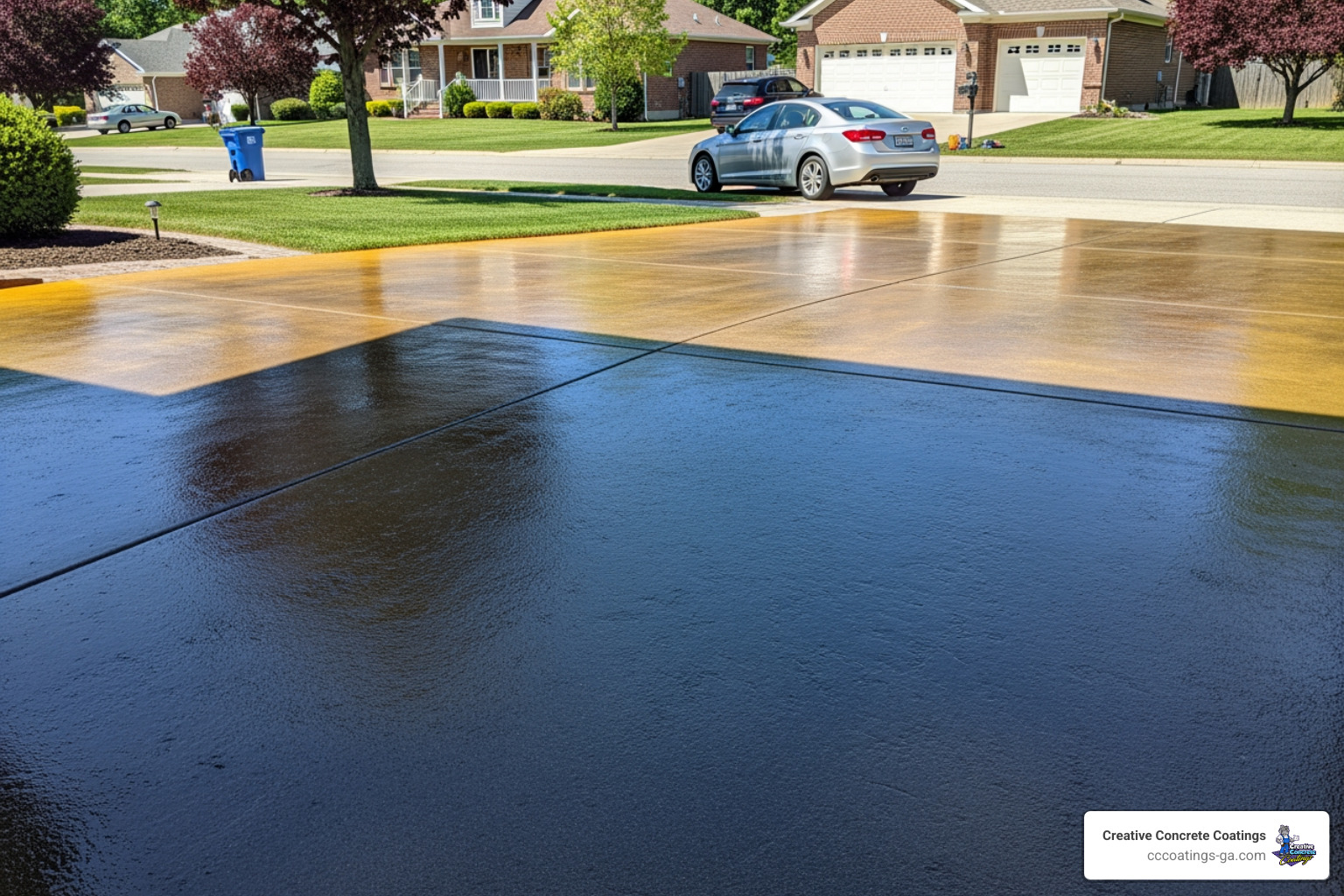
The biggest enemy of standard epoxy is the sun. Standard epoxies are not UV-stable, meaning prolonged exposure to the intense Georgia sun can cause “ambering” (yellowing) or chalking over time. Additionally, moisture vapor from the ground can be a concern. If your driveway has poor drainage, moisture can get trapped under the coating, leading to Disadvantages Of Epoxy Coating On Concrete Driveways like delamination or efflorescence—that white, powdery salt that pushes the coating off the concrete.
“Hot tire pickup” is another common issue with lower-quality DIY kits. This happens when hot tires from a long drive soften the coating, causing it to peel up when you pull the car out the next morning.
Is an Epoxy Coating for Driveways Slippery When Wet?
This is the number one question we get. A high-gloss, smooth epoxy floor can be very slippery when it rains. However, we never install a driveway without traction in mind.
By using anti-slip additives—essentially tiny, transparent beads or fine sand—mixed into the topcoat, we create a non-skid texture that provides plenty of “grip” for shoes and tires. Systems like our Solid Color Industrial coatings often include these safety features as a standard part of the installation.
The Installation Process: From Prep to Topcoat
The secret to a 20-year driveway isn’t the liquid in the bucket; it’s the preparation of the concrete. You can’t just pressure wash the driveway and start rolling.
Here is how we do it at Creative Concrete Coatings:
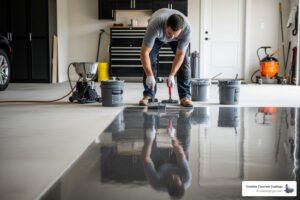
- Diamond Grinding: We use heavy industrial grinders with diamond-tipped blades to “open” the pores of the concrete. This creates a profile (like sandpaper) that the epoxy can grab onto.
- Crack and Pit Repair: We use high-strength menders to fill every crack and divot. Once coated, these repairs become invisible.
- Moisture Testing: We check the slab to ensure there isn’t too much water vapor rising through the concrete, which could cause bubbles.
- Primer and Basecoat: We apply a deep-penetrating primer followed by the main color coat. If you prefer a more natural look, some homeowners opt for a Grind and Clear system that shows off the character of the concrete.
- The Broadcast: If you’re going for a flake look, this is when we “rain” the chips down into the wet basecoat.
- The Topcoat: This is the most critical step for driveways. We apply a UV-stable topcoat (often polyaspartic) to protect the epoxy from the sun and provide that final layer of armor.
Typical curing times mean you can walk on the floor in about 24 hours, but you’ll want to wait 72 hours before parking your heavy truck on it.
Long-Term Maintenance for Your Epoxy Coating for Driveways
Keeping your driveway looking brand new is surprisingly easy. Because the surface is non-porous, dirt just sits on top.
- Weekly Care: A quick sweep with a soft-bristled broom or a leaf blower is usually all it takes.
- Deep Cleaning: Once or twice a year, you can use a mild detergent (like Dawn dish soap) and water. Avoid harsh acids or citrus-based cleaners, which can dull the finish over time.
- Pressure Washing: You can pressure wash an epoxy driveway, but keep the PSI moderate. It’s great for removing stubborn pollen or dust.
- Winter Care: In Georgia, we don’t get much snow, but if we do, avoid using metal shovels that could scratch the surface. Plastic shovels are your friend!
If you have more questions about specific stains, our FAQs page covers a wide range of maintenance scenarios.
Comparing Epoxy to Polyaspartic and Polyurea
In professional coatings, “epoxy” is often used as a catch-all term, but there are newer technologies that we often recommend for outdoor use. Many of our One Day Garage Coatings in Monroe GA actually utilize polyaspartic technology.
| Feature | Standard Epoxy | Polyaspartic / Polyurea |
|---|---|---|
| UV Stability | Poor (Yellows in sun) | Excellent (Won’t fade) |
| Cure Time | 3–7 Days for cars | 24 Hours for cars |
| Flexibility | Brittle (Can crack with slab) | Flexible (Moves with concrete) |
| Temperature Tolerance | Limited application range | Can be applied in extreme cold/heat |
| Bond Strength | Excellent | Superior (Wicks deep into pores) |
For a driveway in locations like Johns Creek or Lawrenceville, we often use an epoxy basecoat for its incredible bond strength, followed by a polyaspartic topcoat for its UV resistance and flexibility.
Frequently Asked Questions about Driveway Coatings
Does epoxy resist hot tire pickup?
Industrial-grade epoxy coating for driveways is specifically formulated to resist hot tire pickup. The “peeling” you see with DIY kits happens because the material is water-based and doesn’t bond deeply. Our high-solids systems are chemically engineered to withstand the heat generated by tires after a highway drive.
Can epoxy be applied over existing cracks?
Yes, but they must be treated first. We don’t just “paint over” cracks. We use flexible fillers and menders that bridge the gap. This restores the structural integrity of the surface and ensures a level, seamless finish. However, if your driveway has major “heaving” (where one side of the crack is much higher than the other), it may require more extensive concrete work before coating.
Should I DIY or hire a professional?
While you can buy a DIY kit, there is a reason professional installations last five times longer. Pros use mechanical diamond grinding (not just acid washing), industrial-strength vacuums to keep your home clean, and precision mixing techniques. If you want a “one and done” solution, our Expert One Day Garage Coating Services in Monroe GA provide a level of quality that is simply impossible to achieve with a roller and a bucket from a retail store.
Conclusion
Your driveway is an enhancement to your home’s curb appeal and your daily happiness. Pulling into a clean, beautiful driveway feels good—and knowing that your concrete is protected from the elements feels even better.
At Creative Concrete Coatings, we’ve spent over 25 years perfecting the art of the pour and the coat. We’ve installed over 455,000 square feet of coatings across Georgia, from Monroe to Alpharetta and everywhere in between. As a veteran-owned business, we don’t cut corners, and we don’t settle for “good enough.”
Whether you are in Dacula, Suwanee, or Athens, we are ready to help you transform your driveway. Ready to stop worrying about cracks and stains? Visit us at https://cccoatings-ga.com/ to see our work or schedule a consultation. Let’s build something that lasts.