Concrete Solutions for Your Toughest Epoxy Needs
Why Finding the Best Epoxy for Concrete Makes All the Difference
The best epoxy for concrete depends on where and how you use it — but here’s a quick breakdown to match your needs fast:
| Use Case | Best Epoxy Type |
|---|---|
| Garage floors | Flake system (epoxy base + polyaspartic topcoat) |
| Indoor commercial spaces | Solid color or clear epoxy |
| Outdoor surfaces | UV-stable epoxy with polyaspartic topcoat |
| Crack repair | Two-part epoxy paste or injection epoxy |
| Basement floors | Low-VOC epoxy with moisture vapor barrier |
Concrete is tough — but without the right protective coating, it stains, cracks, and wears down fast. Vehicles, chemicals, heavy foot traffic, Georgia’s humidity — all of it takes a toll.
Epoxy changes that. It bonds directly to concrete at a molecular level, creating a hard, seamless, non-porous surface that resists stains, chemicals, and impact. Whether you’re protecting a garage floor, a pool deck, or a commercial space, the right epoxy system can extend the life of your concrete significantly while making it look great.
But not all epoxies are equal. The wrong product — or the wrong prep — can lead to peeling, bubbling, or failure within months. That’s why choosing the right system for your specific surface matters.
I’m Scott Shannon, owner of Creative Concrete Coatings and a USMC veteran with decades of hands-on experience in construction and coatings — including installing and specifying the best epoxy for concrete across garages, patios, pool decks, and commercial spaces throughout Georgia. In this guide, I’ll walk you through everything you need to make a confident, informed decision.
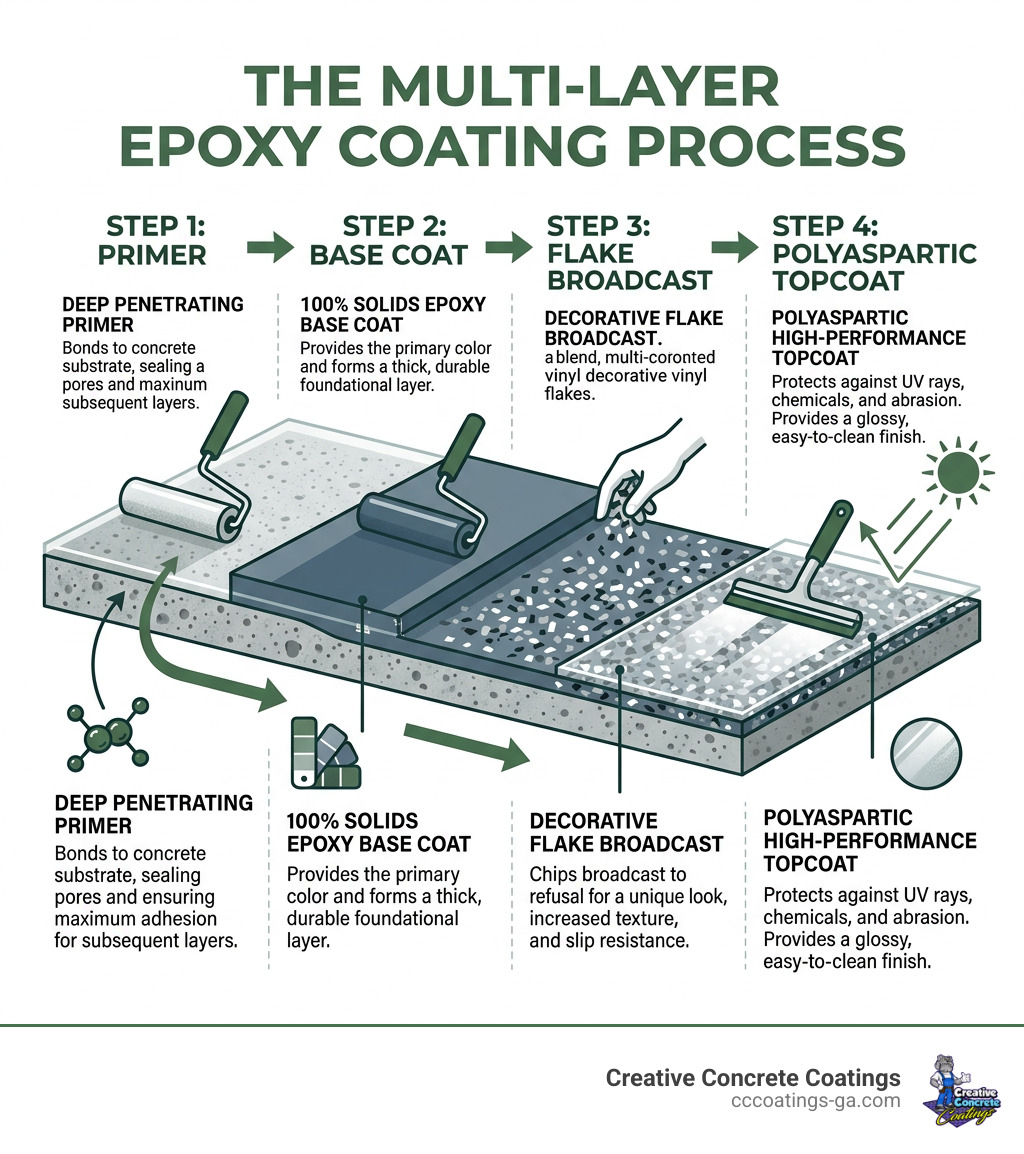
Choosing the Best Epoxy for Concrete Surfaces
When we talk about the best epoxy for concrete, we are referring to a sophisticated two-part system consisting of a resin and a hardener. When these two components are mixed, a chemical reaction occurs that transforms the liquid into a rigid, plastic-like surface. This isn’t just a layer of “thick paint”—it is a molecular bond that fuses with the concrete substrate.
This bond creates a non-porous barrier that is incredibly dense. In high-traffic industrial settings or busy Georgia garages, this translates to superior impact resistance. If you drop a heavy wrench or drive a heavy truck over it, the epoxy distributes that stress, protecting the brittle concrete underneath.
At Creative Concrete Coatings, we’ve seen Who Installs Epoxy Floors in Monroe GA That Can Handle Heavy Traffic and Still Look Great?—and the answer always comes down to the quality of the resin and the skill of the installer.
The benefits of using a high-quality epoxy system include:
- Chemical Resistance: It stands up to oil, gasoline, bleach, and transmission fluid without staining or softening.
- Aesthetic Versatility: You can achieve everything from a clean, industrial look to a decorative multi-colored finish.
- Dust Reduction: Bare concrete “chalks” over time, creating white dust. Epoxy seals the surface completely, keeping your space cleaner.
- Longevity: A professional-grade installation can last decades with minimal maintenance.
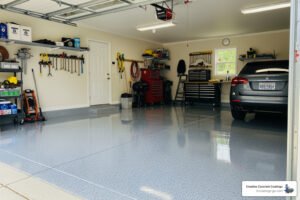
Why Flake Systems are the Best Epoxy for Concrete Garages
For most residential applications, specifically in places like Monroe, Suwanee, or Alpharetta, the Flake Floor is the undisputed heavyweight champion.
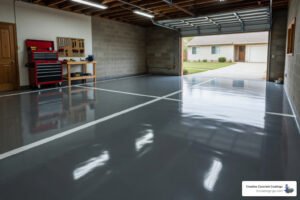
A flake system involves broadcasting decorative vinyl chips into a wet epoxy base coat. This isn’t just for looks—though with Our Colors, it certainly achieves The Best Garage Floor Epoxy to Make Your Neighbors Jealous. The flakes provide vital texture that increases slip resistance, which is essential when Georgia rains make your garage floor wet.
Furthermore, the random pattern of the flakes is excellent at hiding minor imperfections in the concrete and masking the dirt and salt tracked in by your tires. It creates a thick, multi-layered “build” that is much more durable than a simple thin-film coating.
Selecting the Best Epoxy for Concrete Indoors vs. Outdoors
Location is the biggest factor in product selection. Standard epoxy is famously sensitive to UV light. If exposed to direct sunlight for extended periods, it will “amber” or yellow and eventually become brittle.
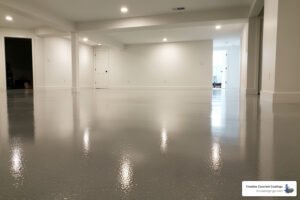
For indoor areas like basements or warehouses, a Solid Color Industrial coating or a Grind and Clear system (which shows off the natural beauty of the concrete) works beautifully. You can see examples of these clean, modern looks in our Gallery.
However, for outdoor surfaces or areas with high moisture, we have to adjust the “recipe.” In Georgia, moisture vapor emission—where water travels up through the concrete slab—is a leading cause of floor failure. We often use a Rockhard MVB (Moisture Vapor Barrier) to prevent delamination. For outdoor UV stability, we typically pair the epoxy base with a polyaspartic topcoat to ensure the color stays vibrant for years.
Comparing Epoxy to Polyaspartic and Acrylic Sealers
Not every “shiny floor” is epoxy. It’s important to understand the players in the market to choose the best epoxy for concrete projects.
| Feature | Epoxy | Polyaspartic | Acrylic Sealer |
|---|---|---|---|
| Durability | High | Extreme (4x more abrasion resistant) | Low to Moderate |
| Cure Time | 3-7 days for full vehicle traffic | 24 hours | 1-2 days |
| UV Resistance | Low (needs topcoat) | Excellent | Good |
| Flexibility | Rigid | High (moves with concrete) | Moderate |
| Best For | Heavy indoor use, basements | Garages, outdoor patios | Pool decks, driveways |
While epoxy provides a thick, protective build, polyaspartic coatings are often preferred for fast-turnaround projects. A polyaspartic system can often be installed in a single day, whereas epoxy requires a longer “pot life” and curing window. Polyaspartic is also more flexible, allowing it to expand and contract during Georgia’s wild temperature swings without cracking.
On the lighter end of the spectrum, an acrylic sealer like Westcoat’s 11/10 system is often the best epoxy for concrete alternative for outdoor walkways or pool decks. These are breathable coatings that allow moisture vapor to escape, preventing the bubbling that can occur with non-breathable systems in high-heat environments.
Essential Surface Preparation and Repair
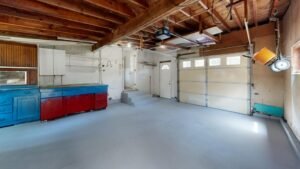
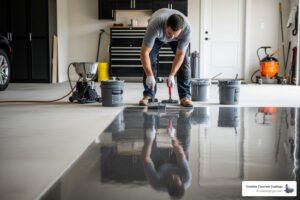
You could use the highest-quality resin in the world, but if you put it on a dirty floor, it will fail. Surface preparation is 90% of a successful job. At Creative Concrete Coatings, we don’t just “wash” the floor; we use mechanical diamond grinding to achieve the correct Concrete Surface Profile (CSP). This opens up the “pores” of the concrete so the epoxy can root itself deep into the slab.
We also perform moisture testing. If a slab is too wet, the coating will eventually peel (delaminate). Before any resin touches the floor, we ensure the surface is dry, clean, and profiled. For minor divots and gouges, we use a Concrete Epoxy Floor Patch Paste, which is a moisture-tolerant 2-part paste that dries hard enough to be ground smooth before the main coating is applied.
Structural Reinforcement and Crack Filling
Cracks happen. Whether it’s from foundation settling or freeze-thaw cycles, they must be addressed properly. For structural issues, we look toward advanced systems like DRICORE® PRO Concrete Repair – Epoxy and Polyurethane for Cracks.
Some cracks require more than just a filler; they need reinforcement. Carbon fiber is a game-changer here—it is 10 times stronger than steel and doesn’t corrode. For leaking cracks, polyurethane foam is incredible because it expands up to 15 times its volume to fill every void.
For DIYers or small repairs, you can Get the Crack Injection Kit to handle minor foundation wall cracks. However, for a floor that needs to look seamless and stay that way, professional-grade anchoring epoxy and crack-bridging resins are essential.
Professional Application and Maintenance
Applying the best epoxy for concrete is a race against time. Once the resin and hardener meet, the “pot life” begins—usually 25 to 60 minutes depending on the temperature. We use a squeegee to move the material and a back-roll technique to ensure an even, self-leveling finish.
The Curing Timeline:
- Dry to touch: 8–12 hours.
- Light foot traffic: 24 hours.
- Heavy items/Furniture: 48–72 hours.
- Full vehicle traffic/Chemical cure: 7 days.
Once your floor is cured, maintenance is surprisingly simple. Because the surface is non-porous, dirt just sits on top.
- Routine Cleaning: Use a soft-bristle broom or a leaf blower for dust.
- Mopping: Use a bucket of warm water with a small amount of mild soap (like Dawn) or a splash of ammonia.
- What to Avoid: Stay away from citrus-based cleaners or vinegar, as the acid can eventually dull the high-gloss finish of the epoxy.
Frequently Asked Questions about Concrete Epoxy
How long does it take for epoxy to fully cure?
While you can usually walk on the floor in about 24 hours, the chemical “hardening” process takes longer. We recommend waiting at least 72 hours before moving heavy equipment back into a garage and a full 7 days before driving a vehicle on it. This ensures the bond is strong enough to resist “hot tire pick-up.”
Can epoxy be applied over existing coatings or tiles?
It is possible, but risky. Epoxy bonds best to raw, porous concrete. If you apply it over an old coating or tile, your new floor is only as strong as the bond of the old floor. We almost always recommend grinding the surface back to bare concrete to ensure a permanent result.
Is epoxy floor coating slippery when wet?
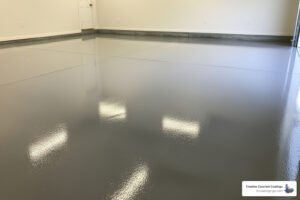
Smooth, high-gloss epoxy can be very slippery when wet. This is why we highly recommend flake systems or adding a “slip-resistance” additive (like aluminum oxide or fine sand) into the topcoat. This provides the necessary grip for safety without ruining the look of the floor.
Conclusion
Choosing the best epoxy for concrete is a significant upgrade for your property’s value and functionality. Whether you are in Monroe, Athens, or Johns Creek, the goal is the same: a floor that looks incredible and stands up to whatever you throw at it.
At Creative Concrete Coatings, we bring over 25 years of experience and more than 455,000 square feet of installed excellence to every project. We understand the Georgia climate, the local soil conditions, and exactly which products will thrive in your specific space. We are proud to be The #1 Choice for Epoxy Garage Floor Coatings in Monroe GA, serving our neighbors with 100% satisfaction as our only standard.
Ready to transform your concrete? Let’s build something that lasts.